
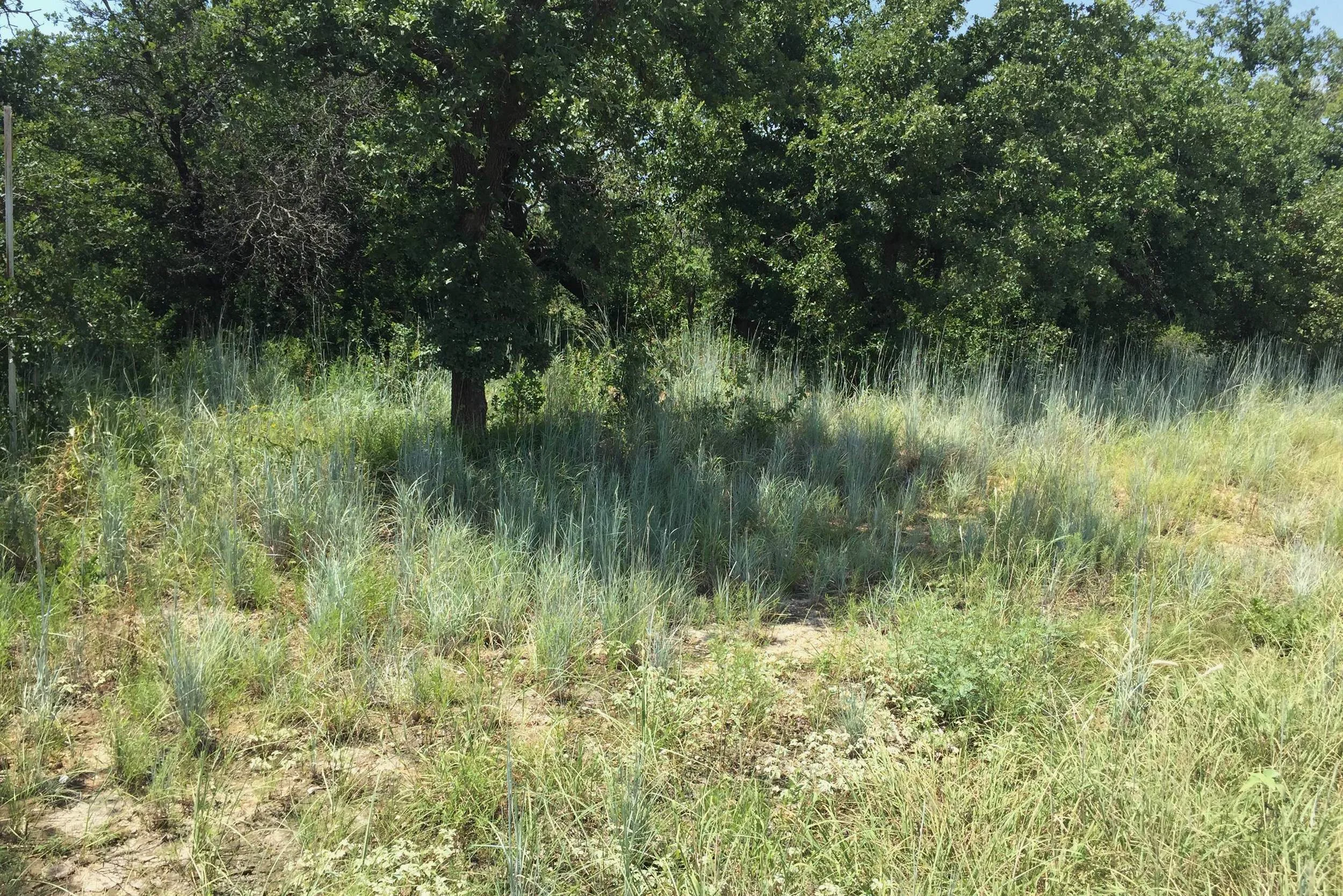
Cement Mountain
It was a very warm August afternoon when my mom and I ventured out along Cement Mountain Road in southeastern Young County, Texas in search of some unique flora. This county-maintained gravel road traverses the transition between the Rolling Plains and Oak Woods eco-regions. The soil here is sandy and conglomerate, proving responsible for the formation's "Cement" name. There is a lot of early Texas history on this topographical rise (it's difficult for me to call this a "mountain"), including the murder of a Texas Ranger by Native Americans in 1864. Luckily for us, there were no aggressive Indians in sight, and the county crews had not mowed the bar ditches all year.
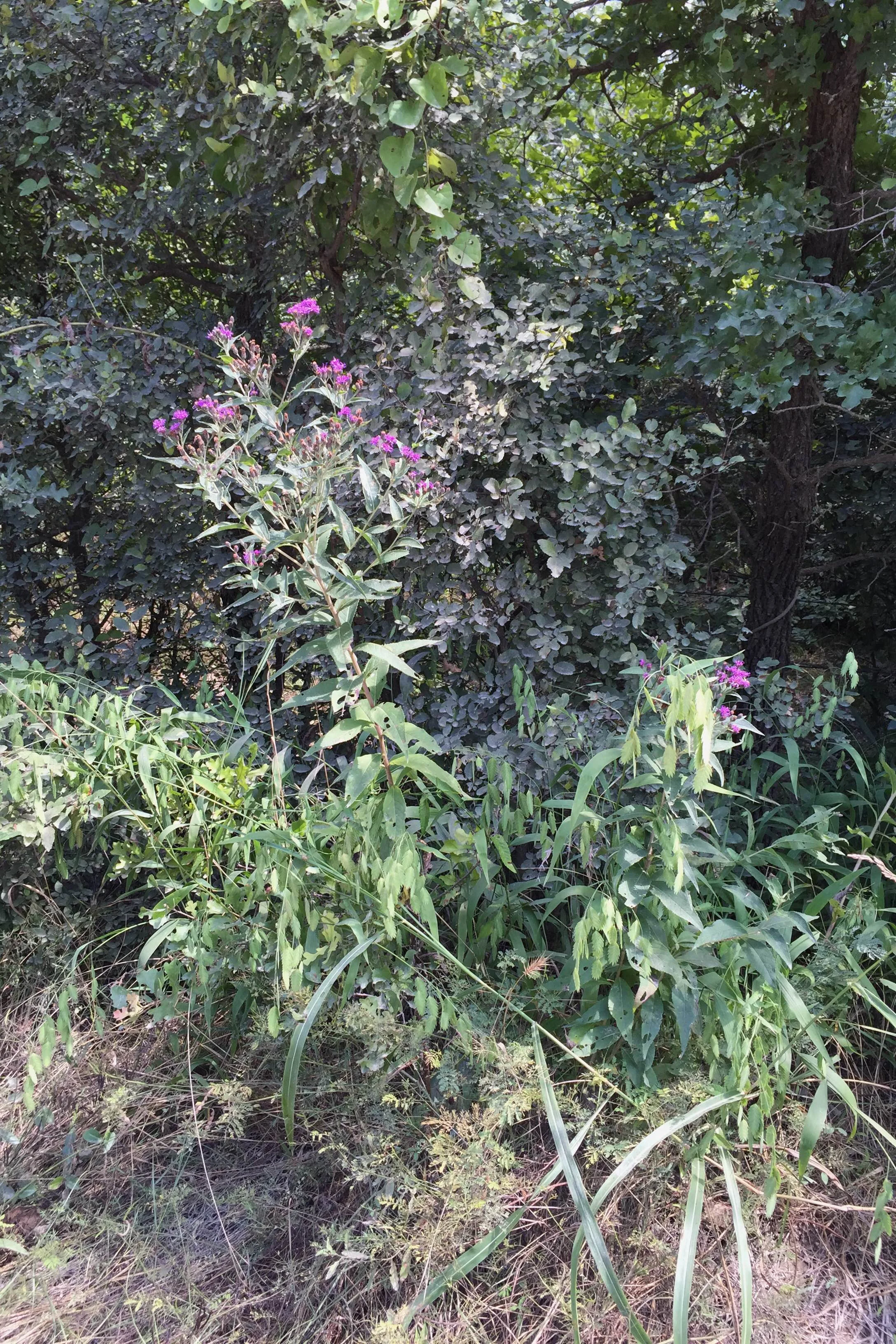
Vernonia baldwinii, Baldwin's Ironweed

Vernonia baldwinii, Baldwin's Ironweed
Vernonia is found across much of Texas and the baldwinii species stands out because of its relatively tall mature height, reaching 3-5 feet. These purple blooms begin popping in the heat of summer and will last until first frost.
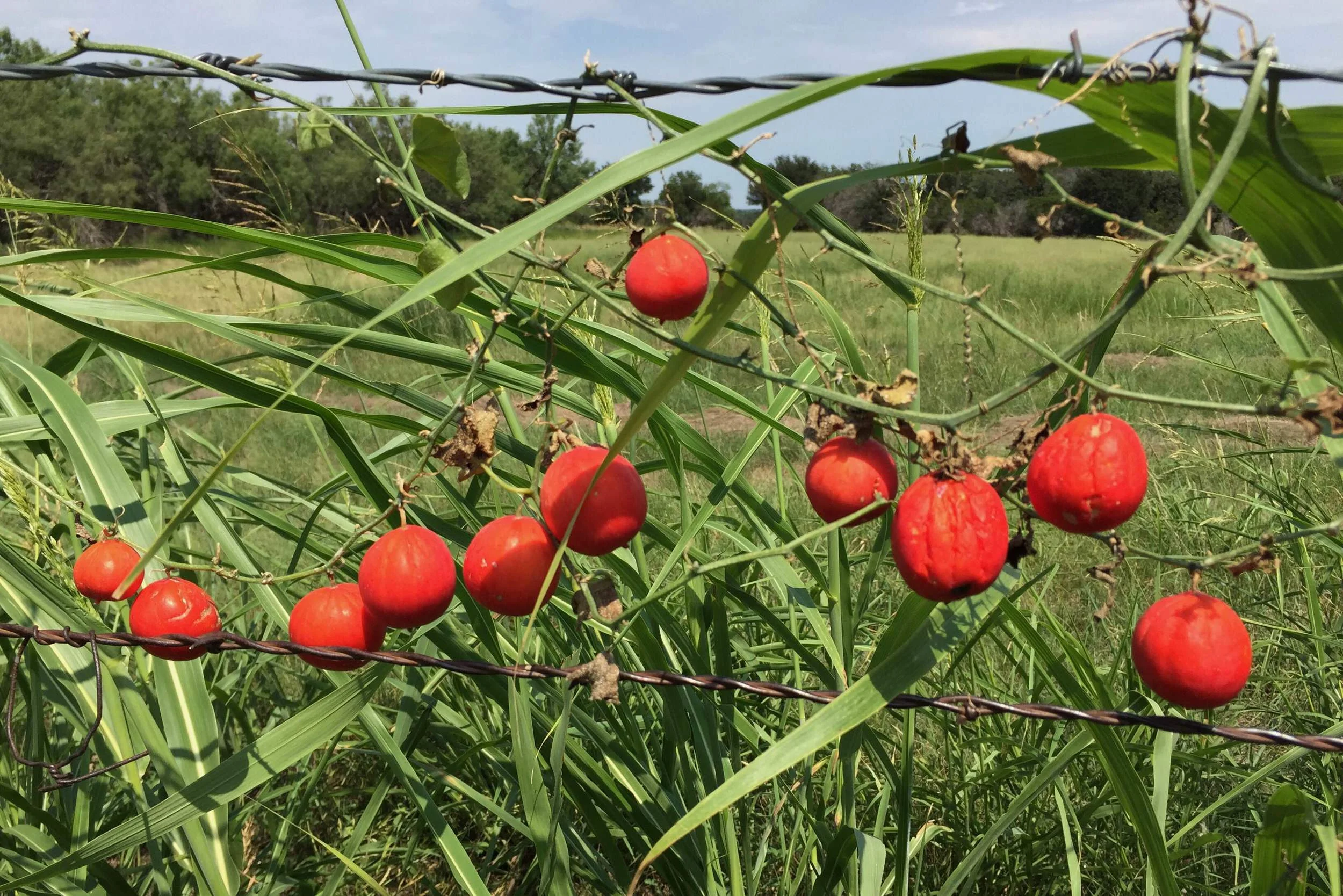
Ibervillea lindheimeri, Balsam Gourd
Balsam Gourd is easily spotted for several reasons. The red fruit hang like lanterns from the vining stems. Birds drop these fruits' seeds along fence rows, and then the fence serves as the trellis, continuing a never-ending cycle. Before the land was divided and separated for agriculture, a shrub or tree served as the best trellis. And how convenient that many roads follow fence lines? The leaves of this plant are thick and waxy, much like a succulent. And if the base of the plant can be located, one will find a tuber, forming a large caudex with age.
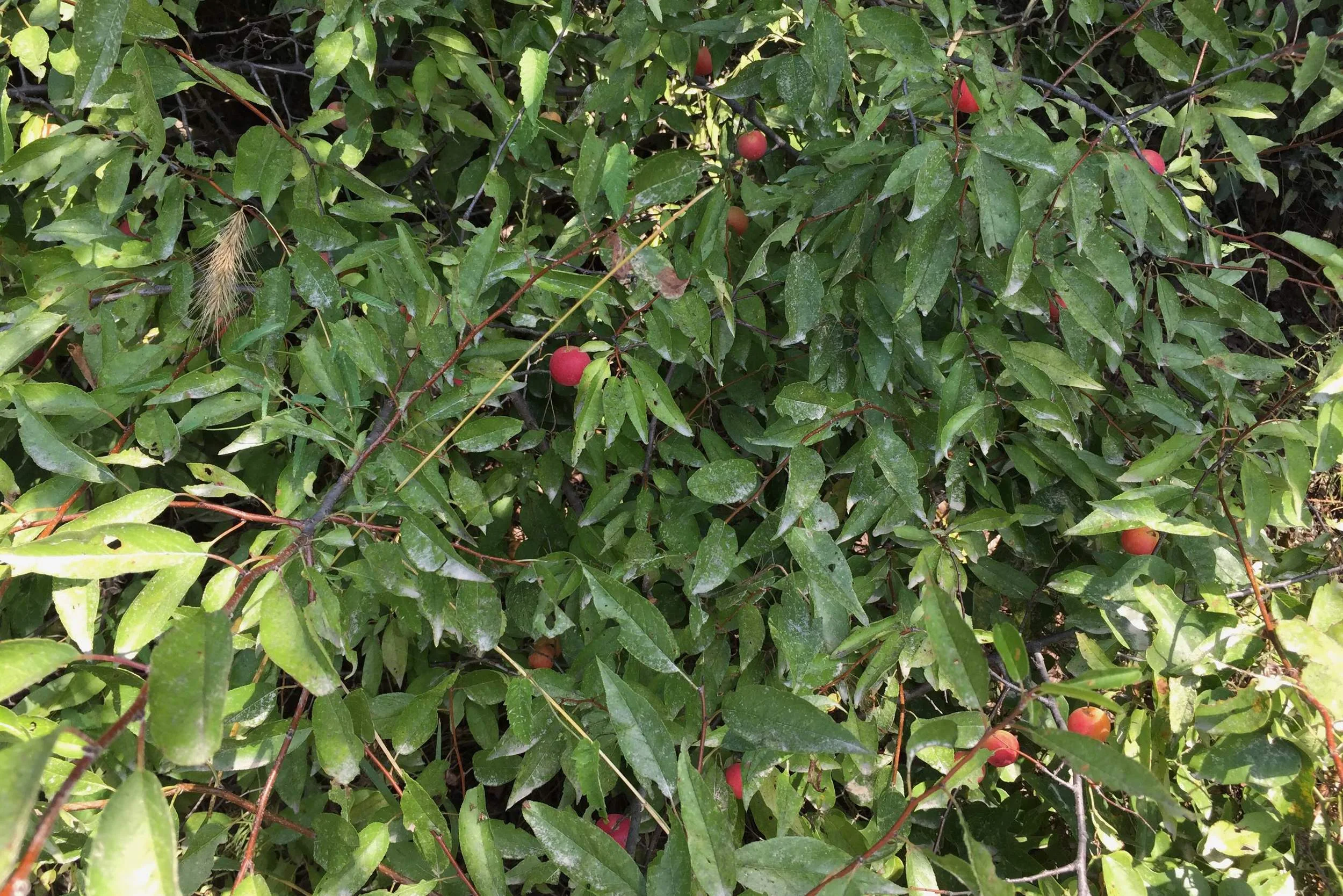
Prunus rivularis, River Plum
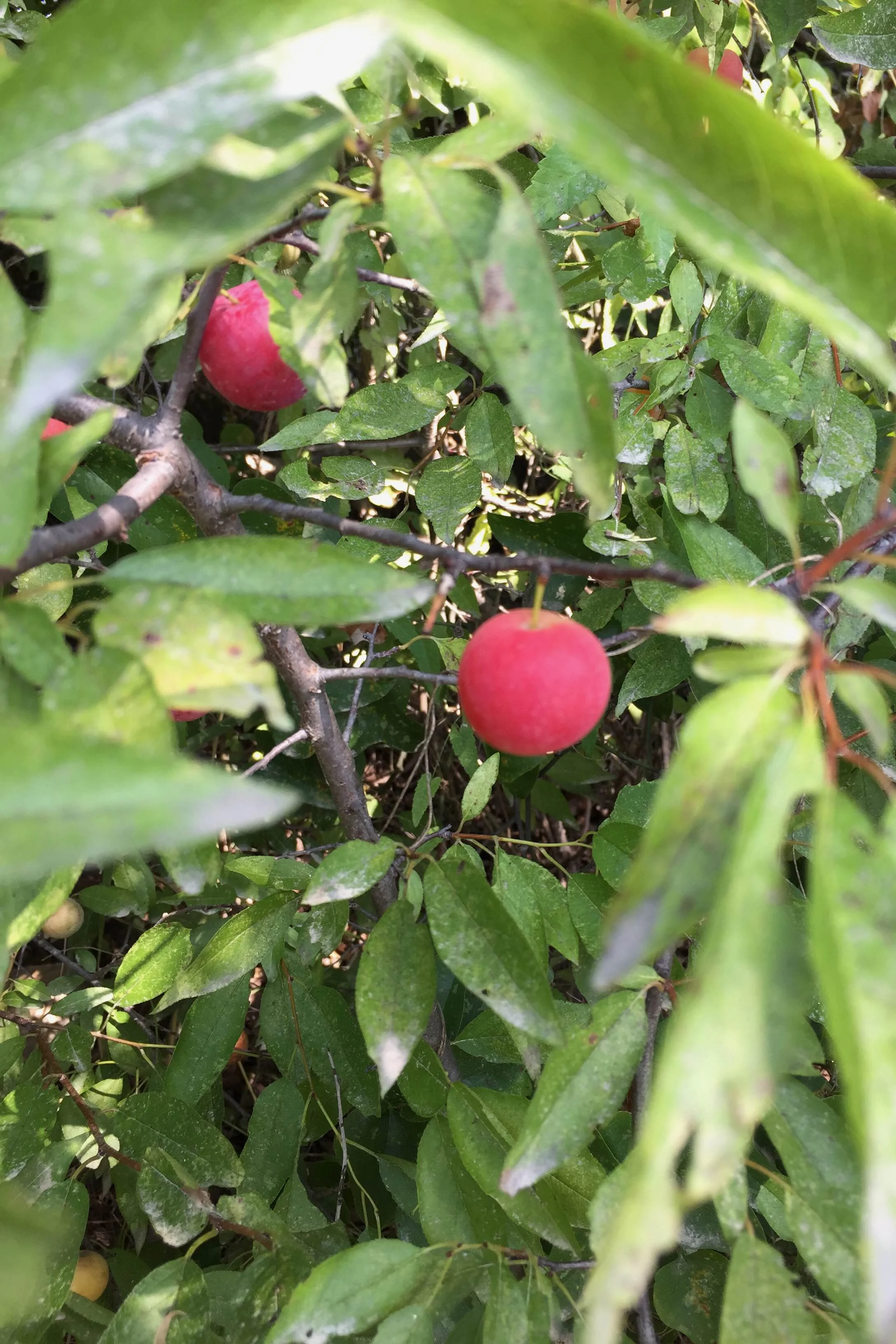
Prunus rivularis, River Plum
Prunus rivularis is a thicket-forming species of plum that typically reaches 6 feet tall. These are not readily suited for a controlled landscape application but they do have a couple of redeeming qualities: profusions of white, fragrant blooms in the spring and edible, tasty fruit in the summer.
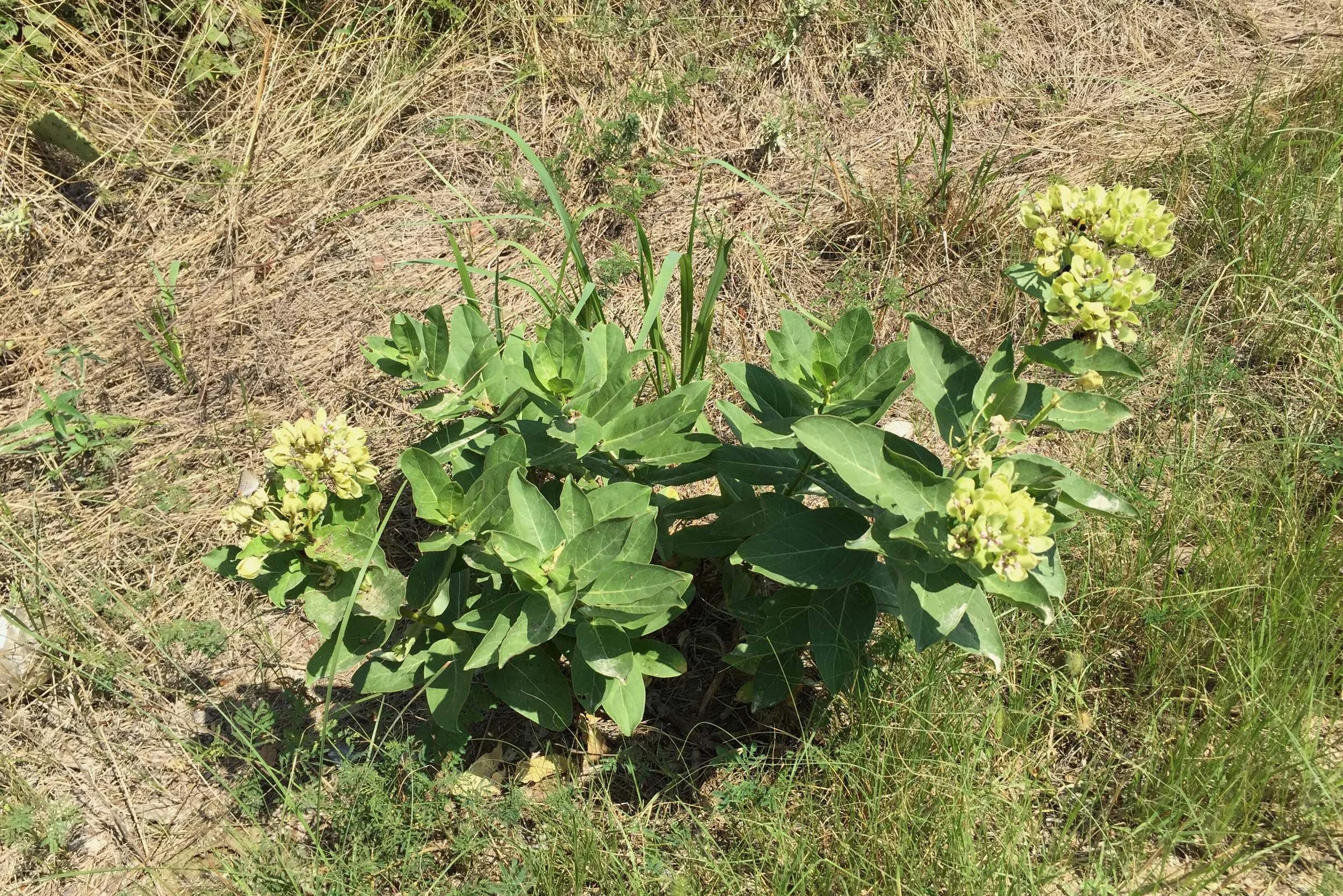
Asclepias viridis, Green Milkweed
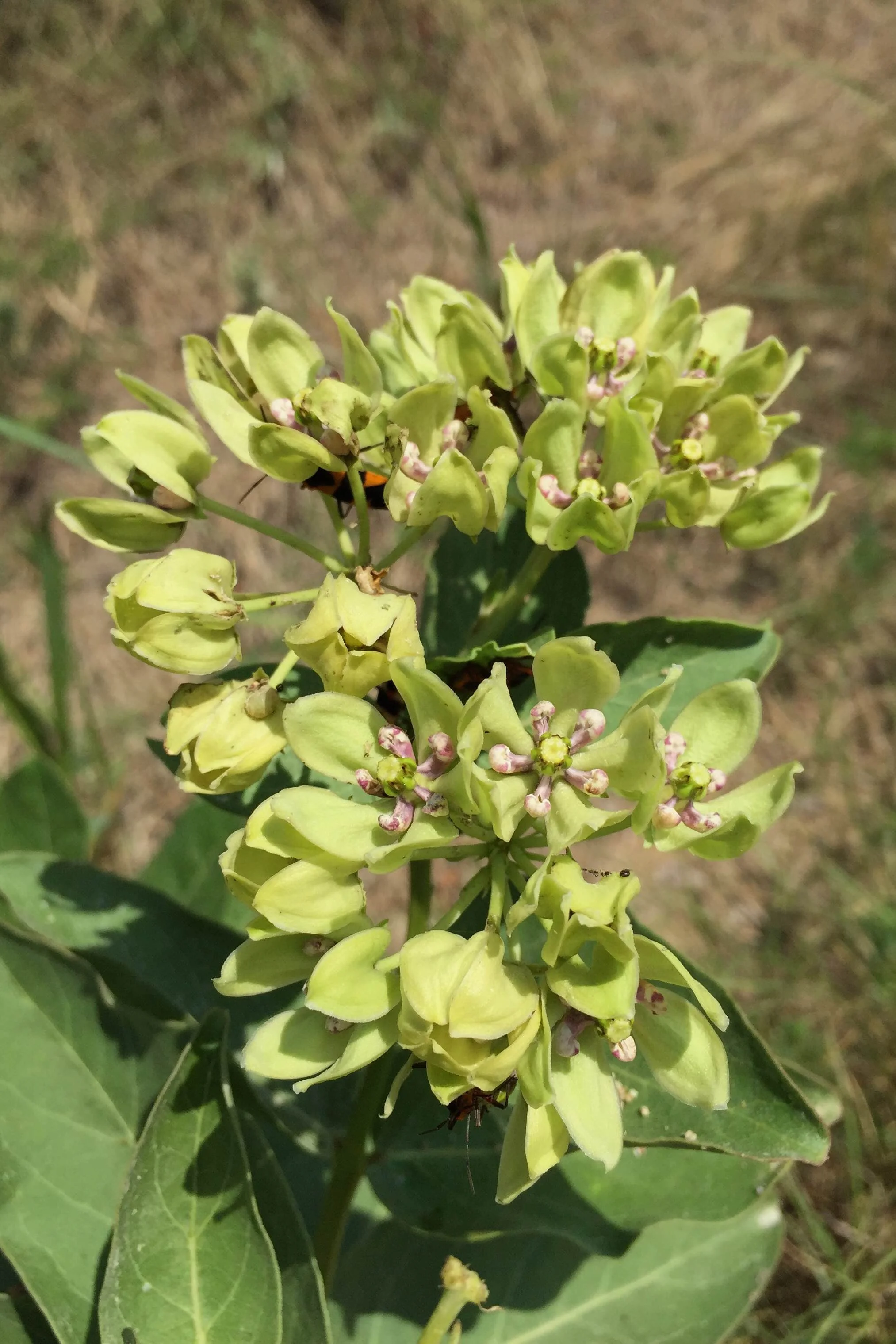
Asclepias viridis, Green Milkweed
This is the first of several Milkweed species documented along this road. The blooms are similar to A. asperula, but the leaves are wider and the plant has a more mounding habit rather than prostrate. Like all Milkweeds, this species is very desirable to many butterflies, yet toxic to animals and humans.
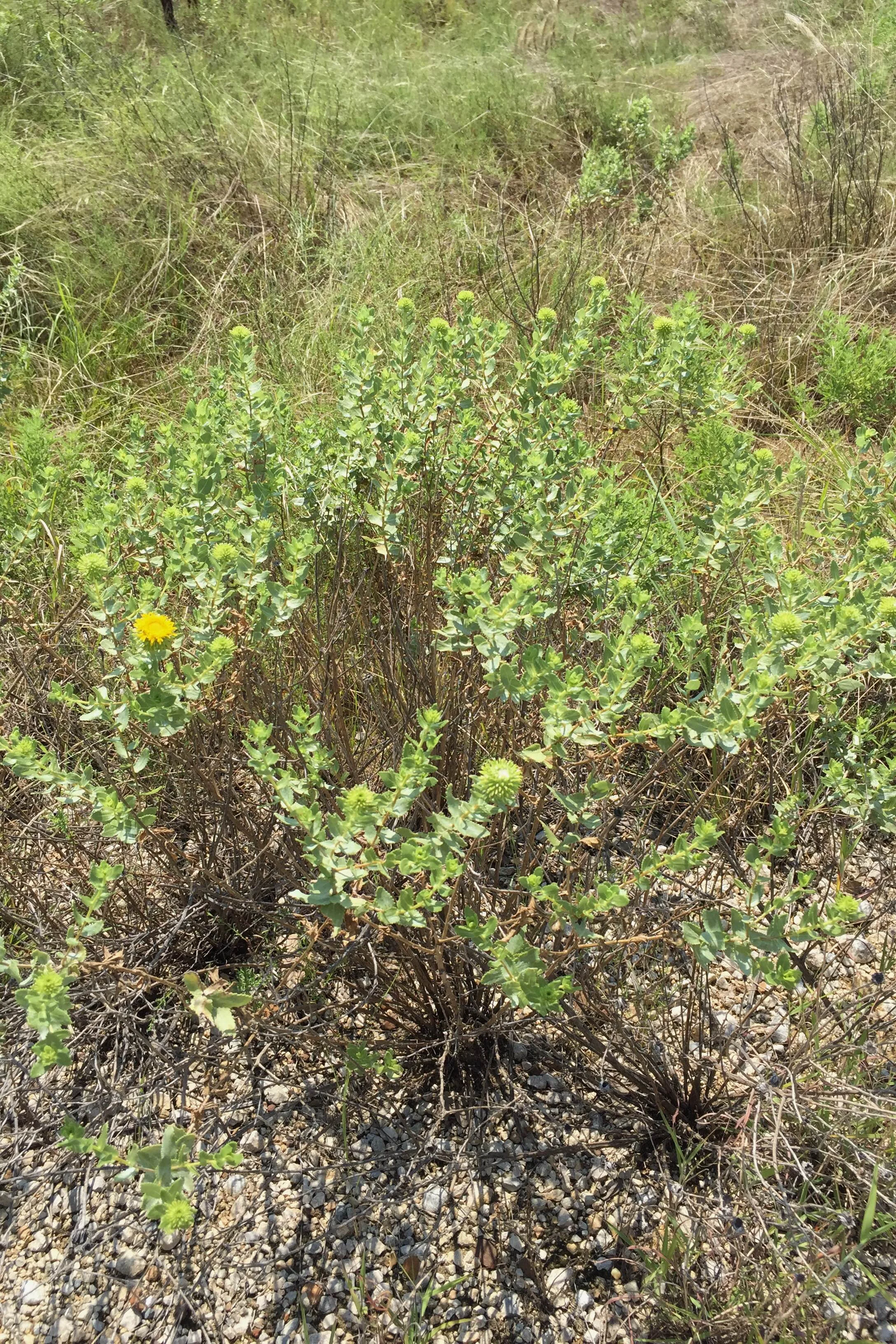
Grindelia nuda var. nuda, Curlytop Gumweed
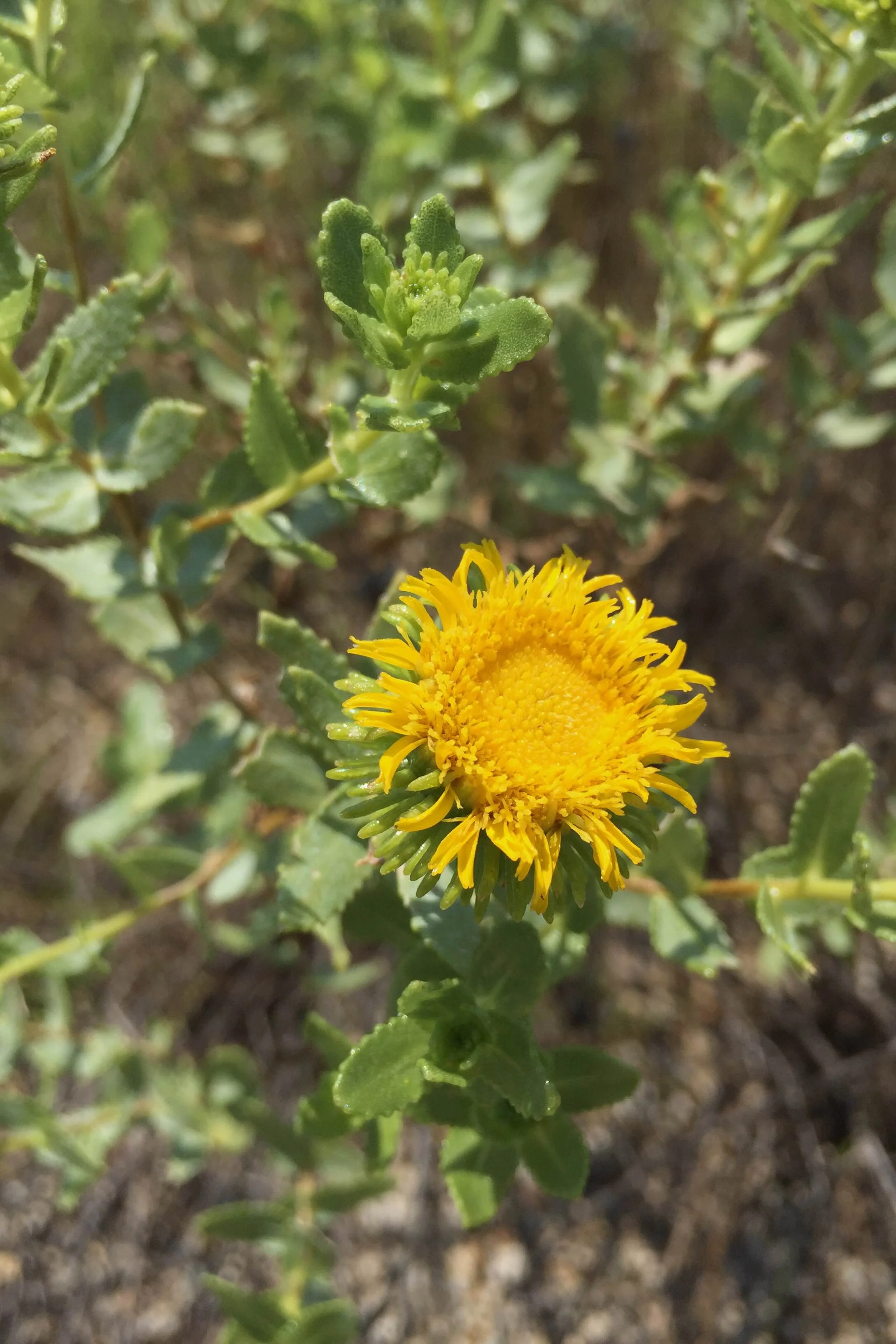
Grindelia nuda var. nuda, Curlytop Gumweed
There are many Grindelia species occurring in Texas, but this species stands out because of the frilled bloom that lacks single, large petals like others.
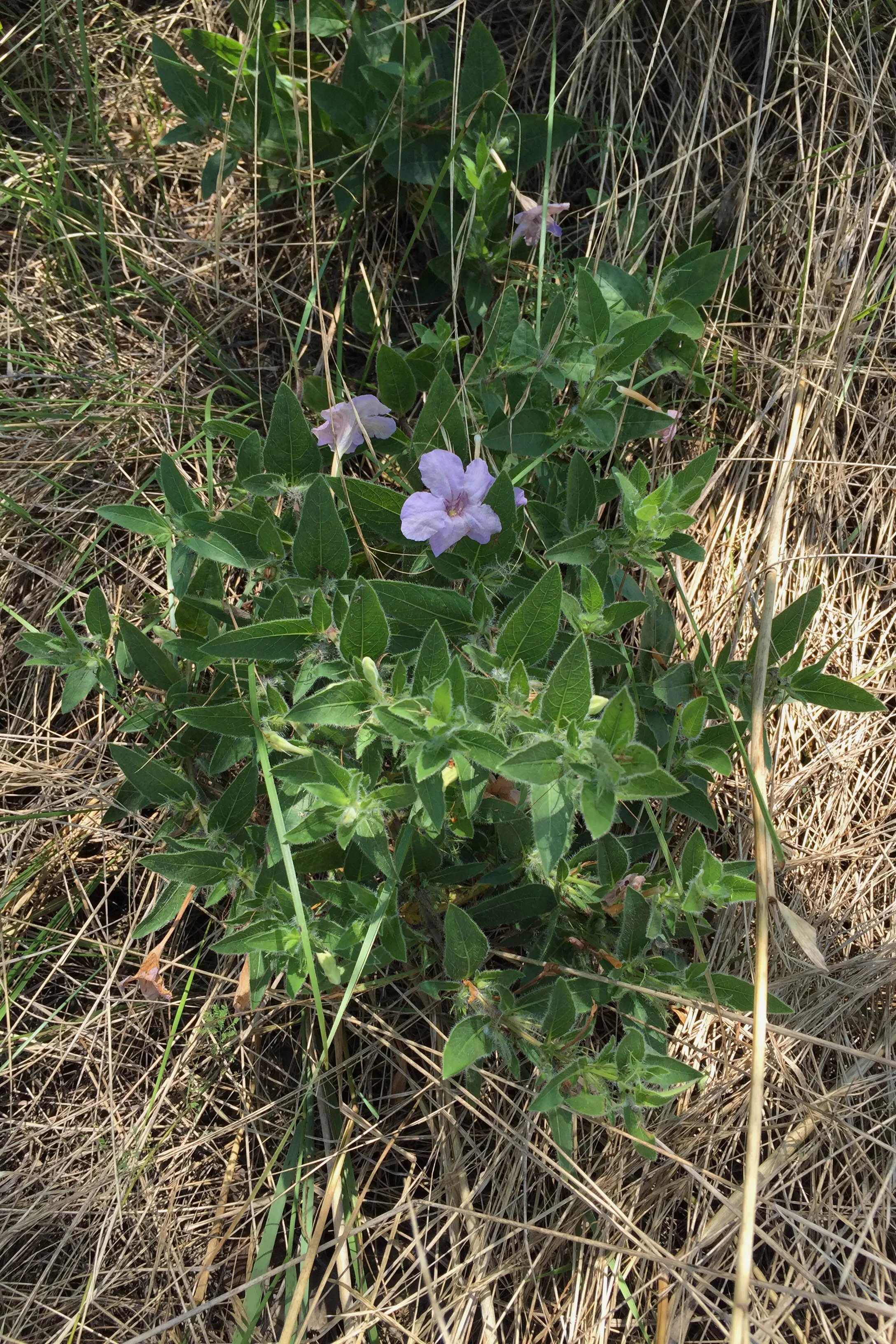
Ruellia humilis, Hairy Ruellia
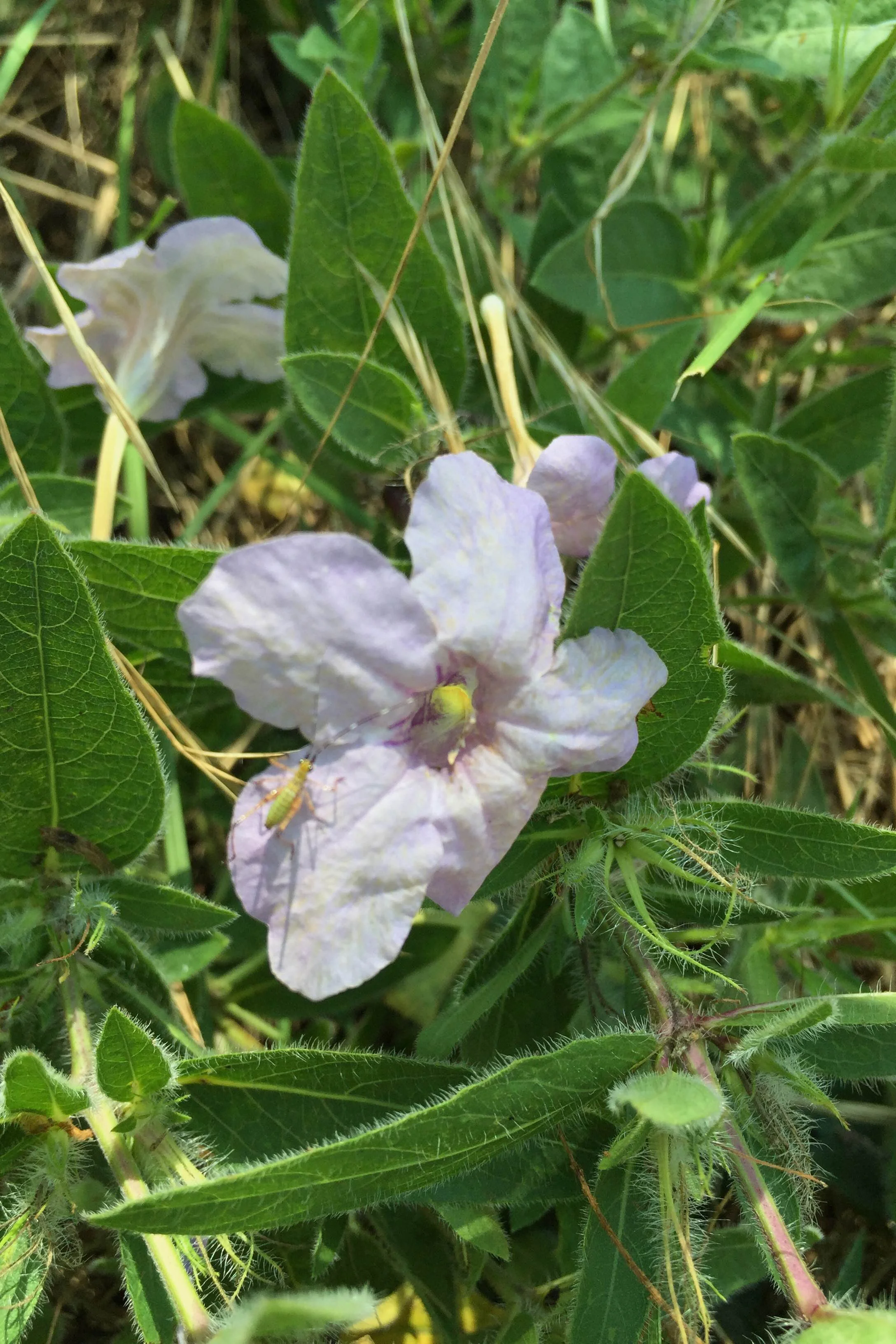
Ruellia humilis, Hairy Ruellia
Ruellia has been readily used in landscape applications for some time now, but few are as interesting as this Texas native. Defined by its hirsute leaves and large blooms, this specimen was growing in the shade of a hackberry and in the bottom of the roadside drainage.
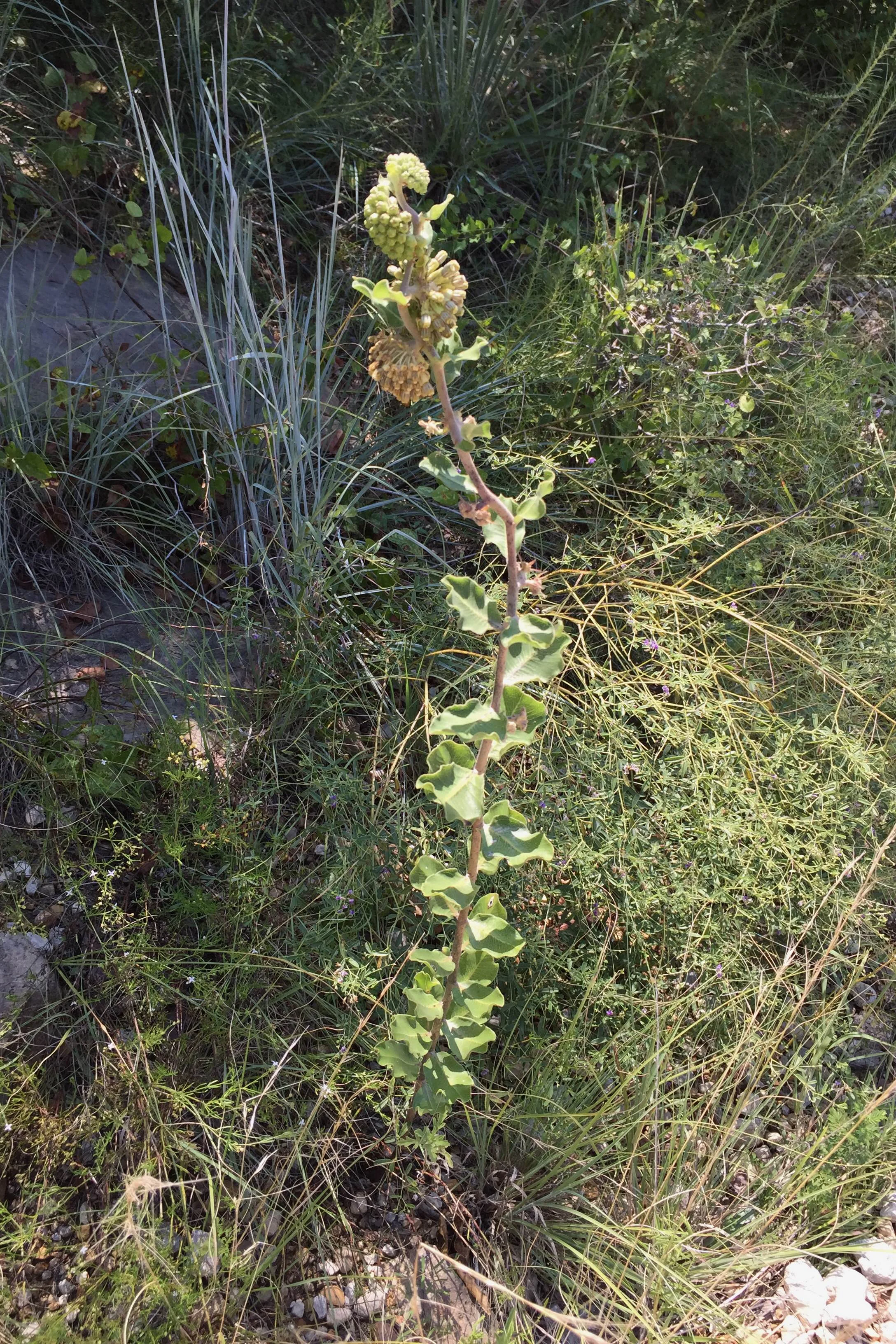
Aslepias viridiflora, Green Comet Milkweed
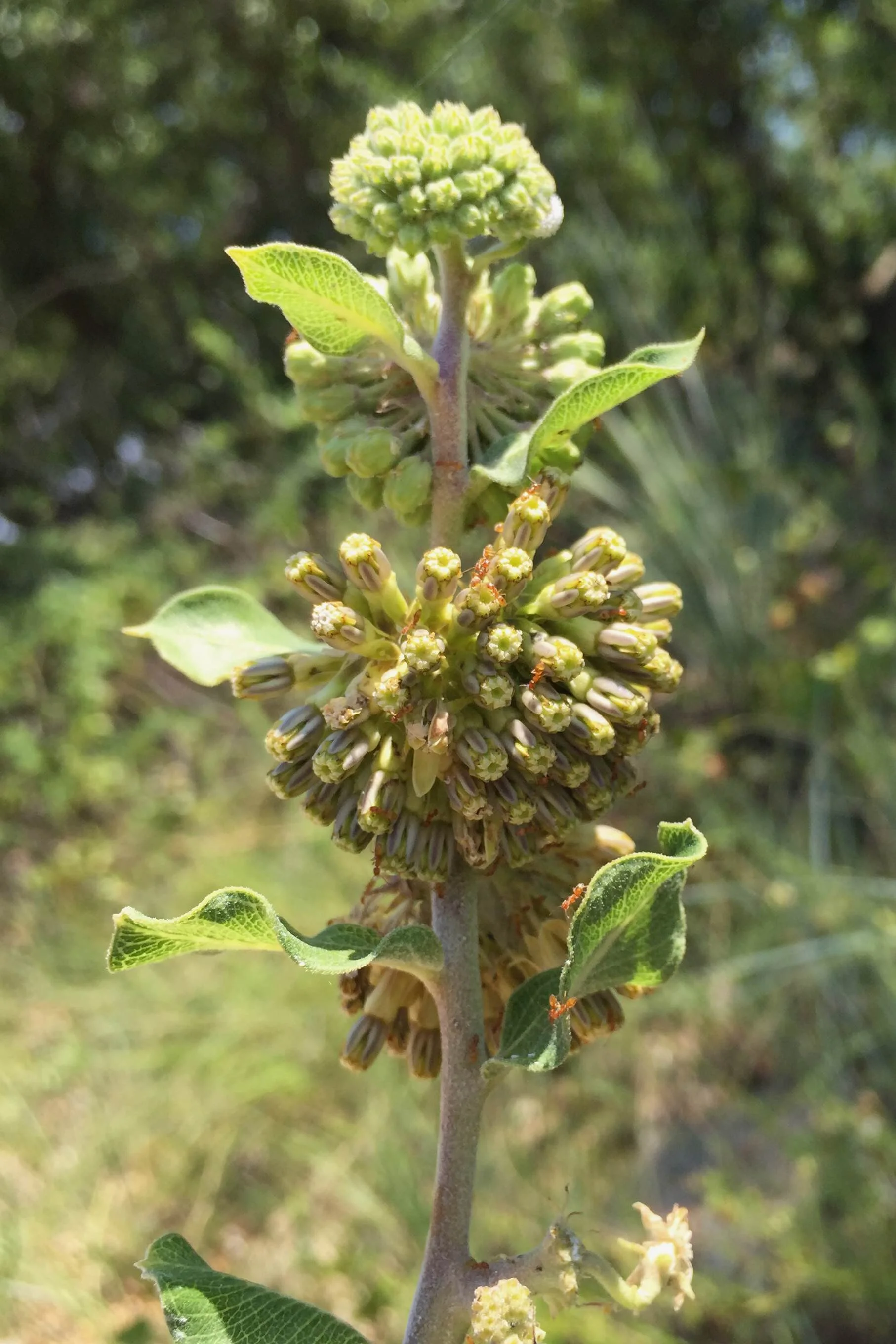
Asclepias viridiflora, Green Comet Milkweed
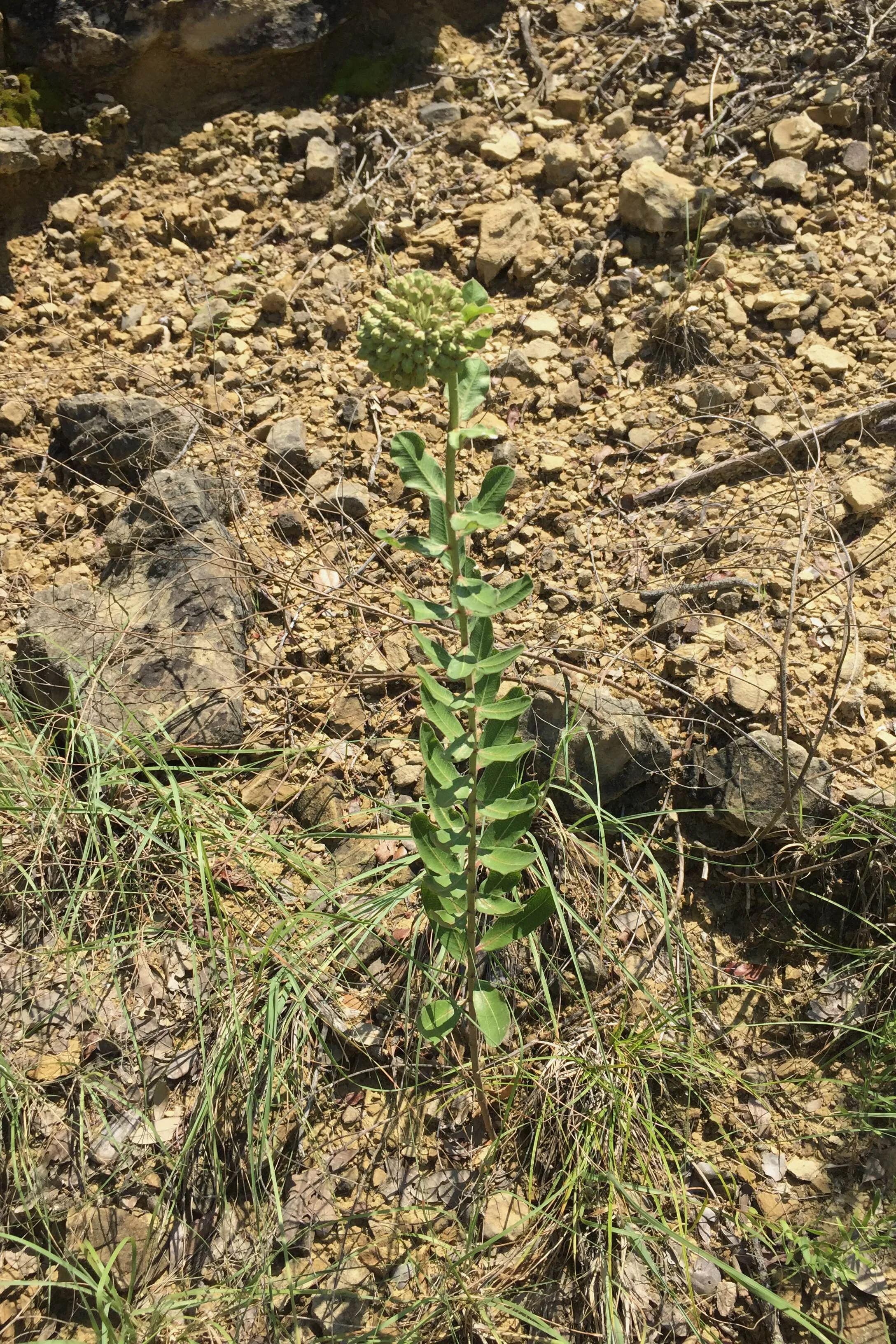
Aslepias viridiflora, Green Comet Milkweed

Asclepias viridiflora, Green Comet Milkweed
Another Milkweed species, Asclepias viridiflora, is single-stemmed and grows up to 3 feet tall. Hemispherical blooms adorn the top, alternating on the crooked stems and nodding under their own weight. Tinges of pink and purple can be detected in the leaf margins and blooms.
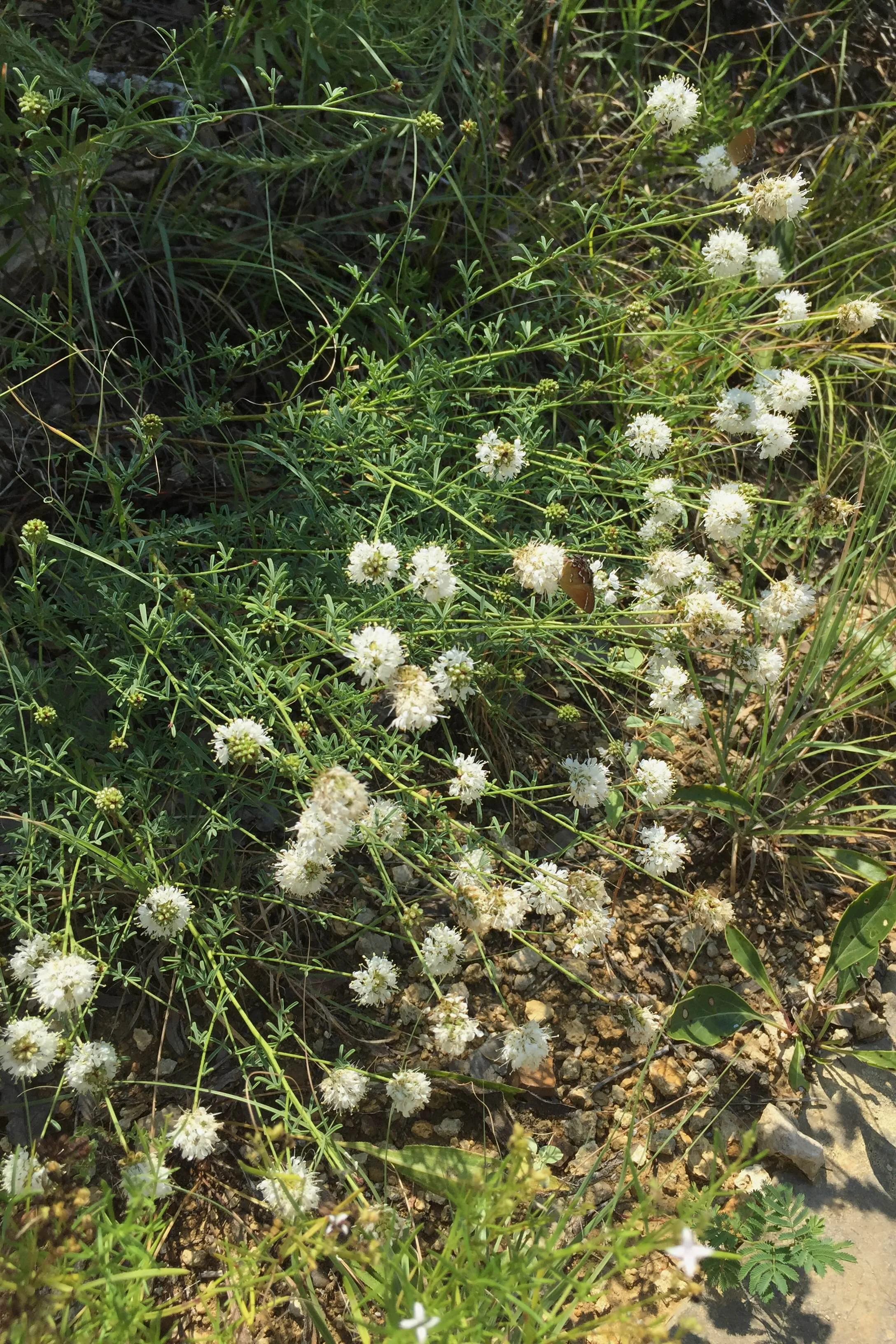
Dalea multiflora, White Prairie Clover

Dalea multiflora, White Prairie Clover
Dalea is probably one of my favorite herbaceous genera. This white-blooming species was absolutely covered in pollinators desperate for hard-to-find, mid-summer nectar. The species name is derived from its proclivity to bloom profusely.
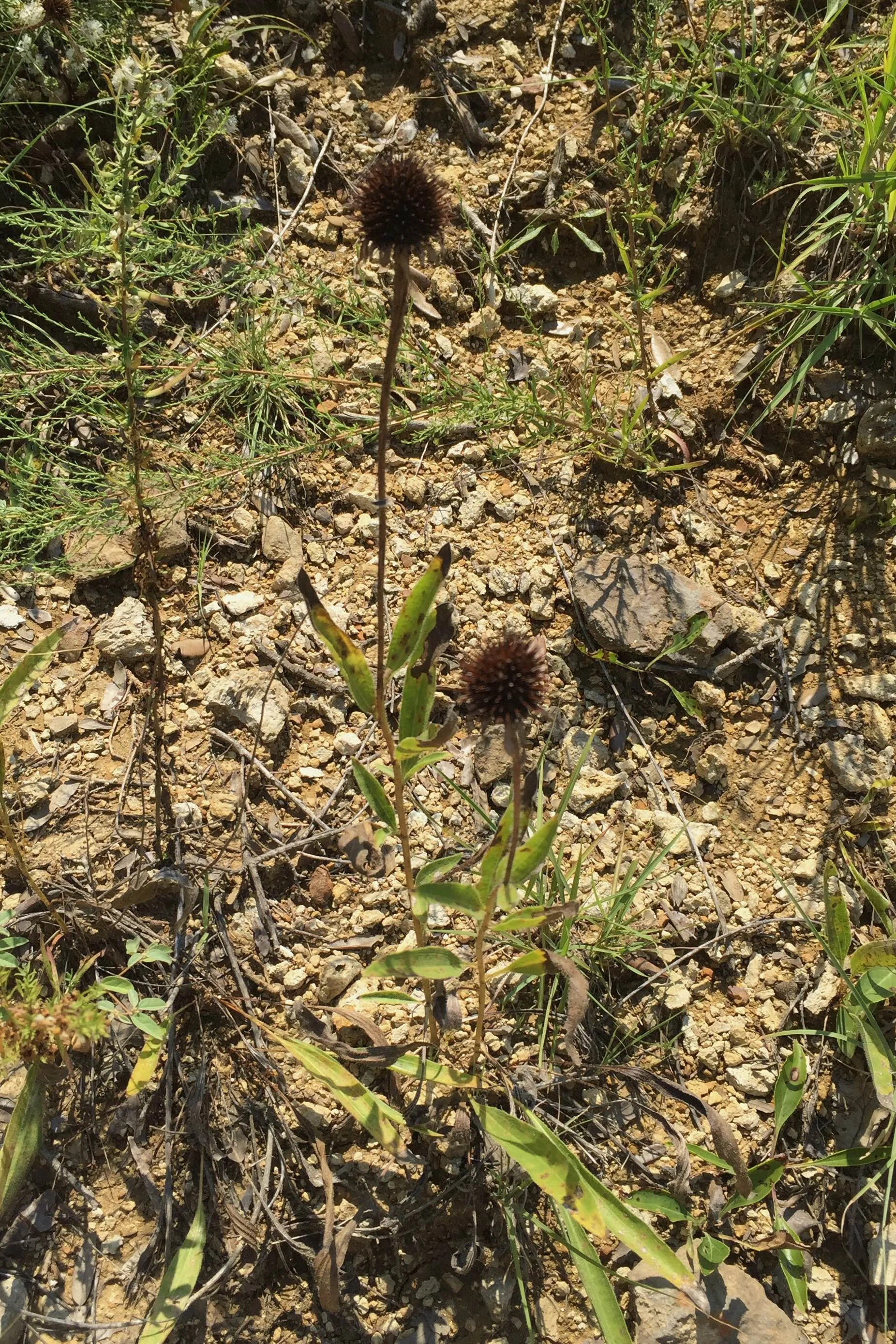
Echinacea angustifolia, Narrow Leaf Coneflower
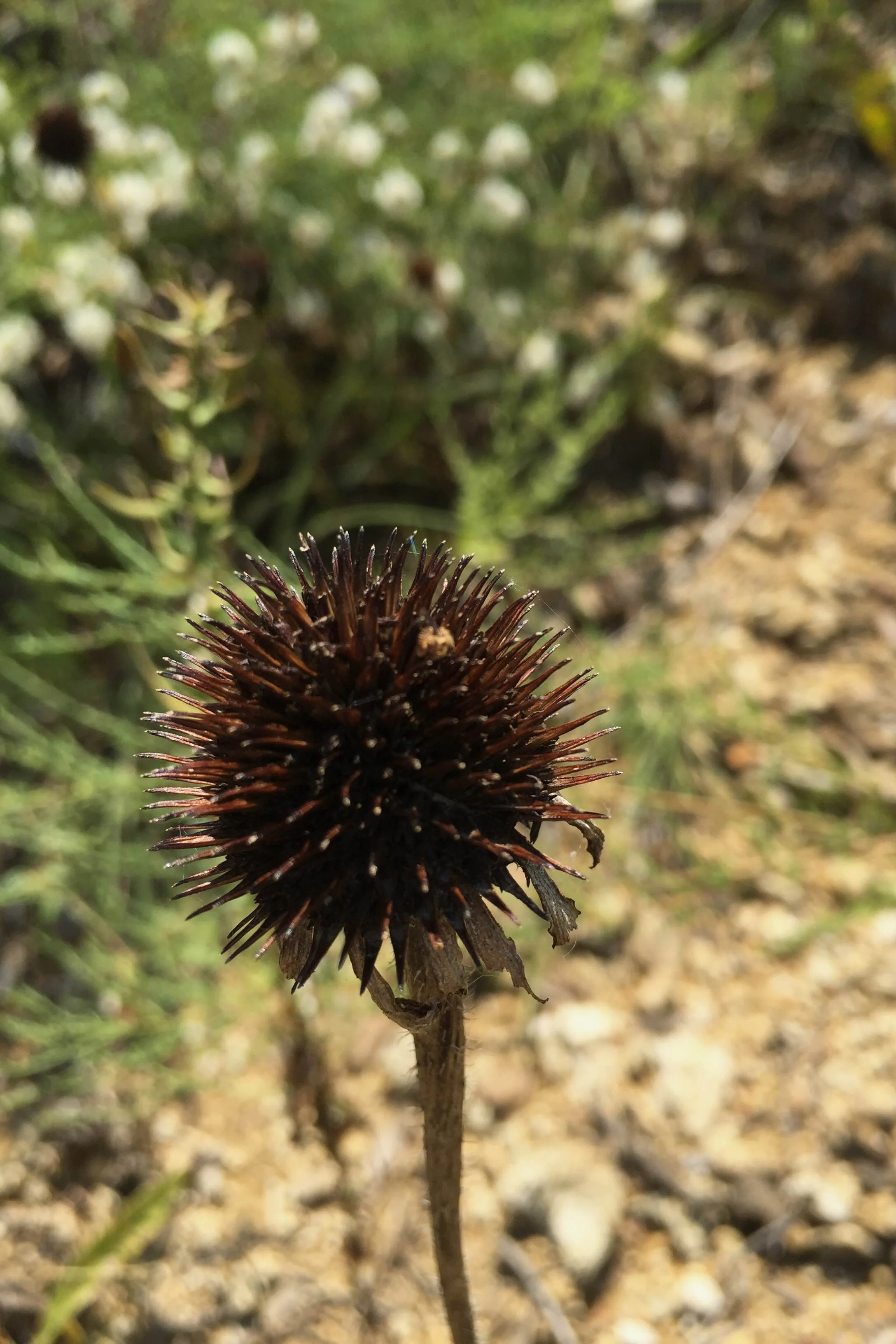
Echinacea angustifolia, Narrow Leaf Coneflower
We are about 4 weeks late in witnessing this purple coneflower blooming in all of its glory. I will be sure to visit this site again in June next year.
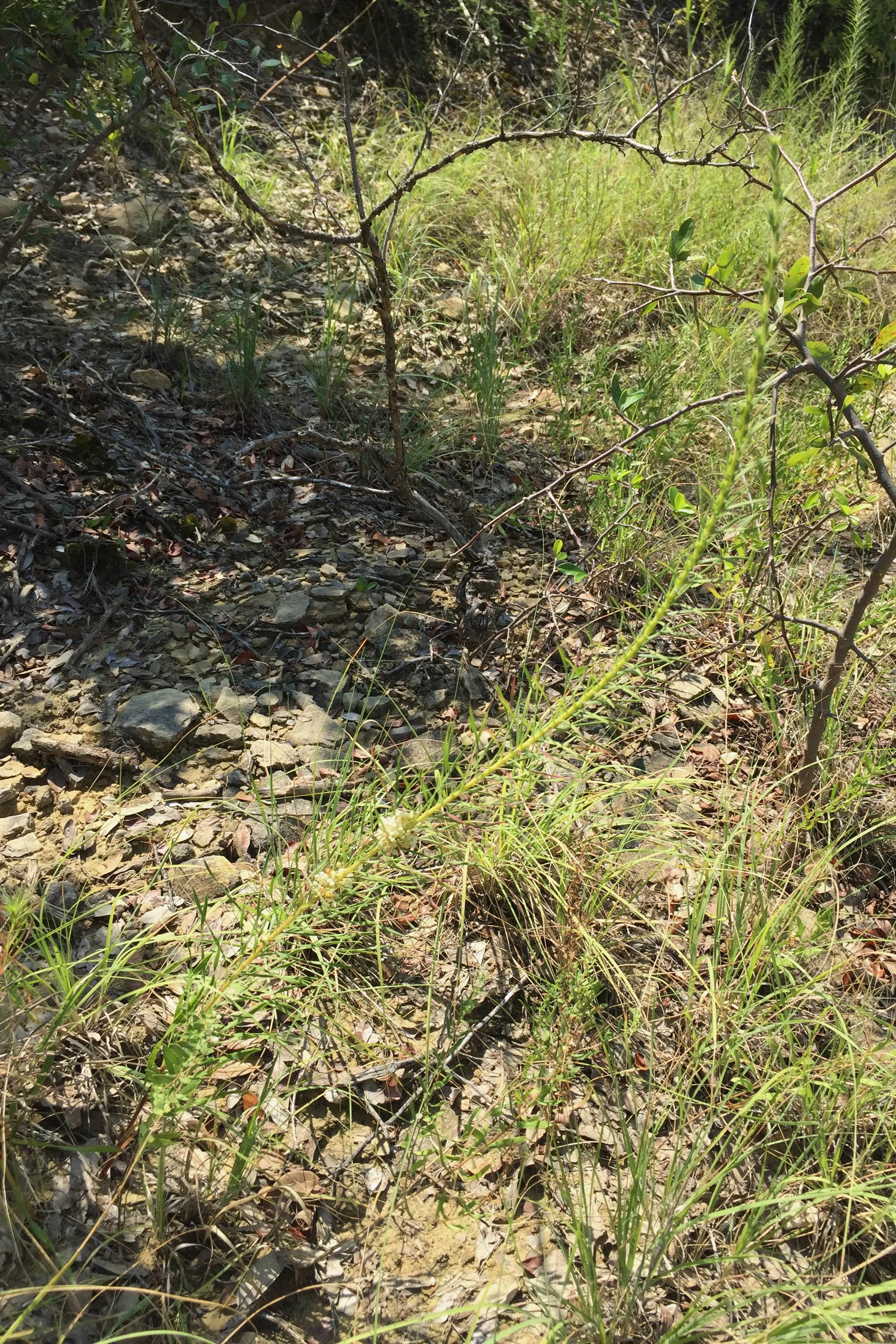
Liatris punctata var. mucronata, Texas Gayfeather
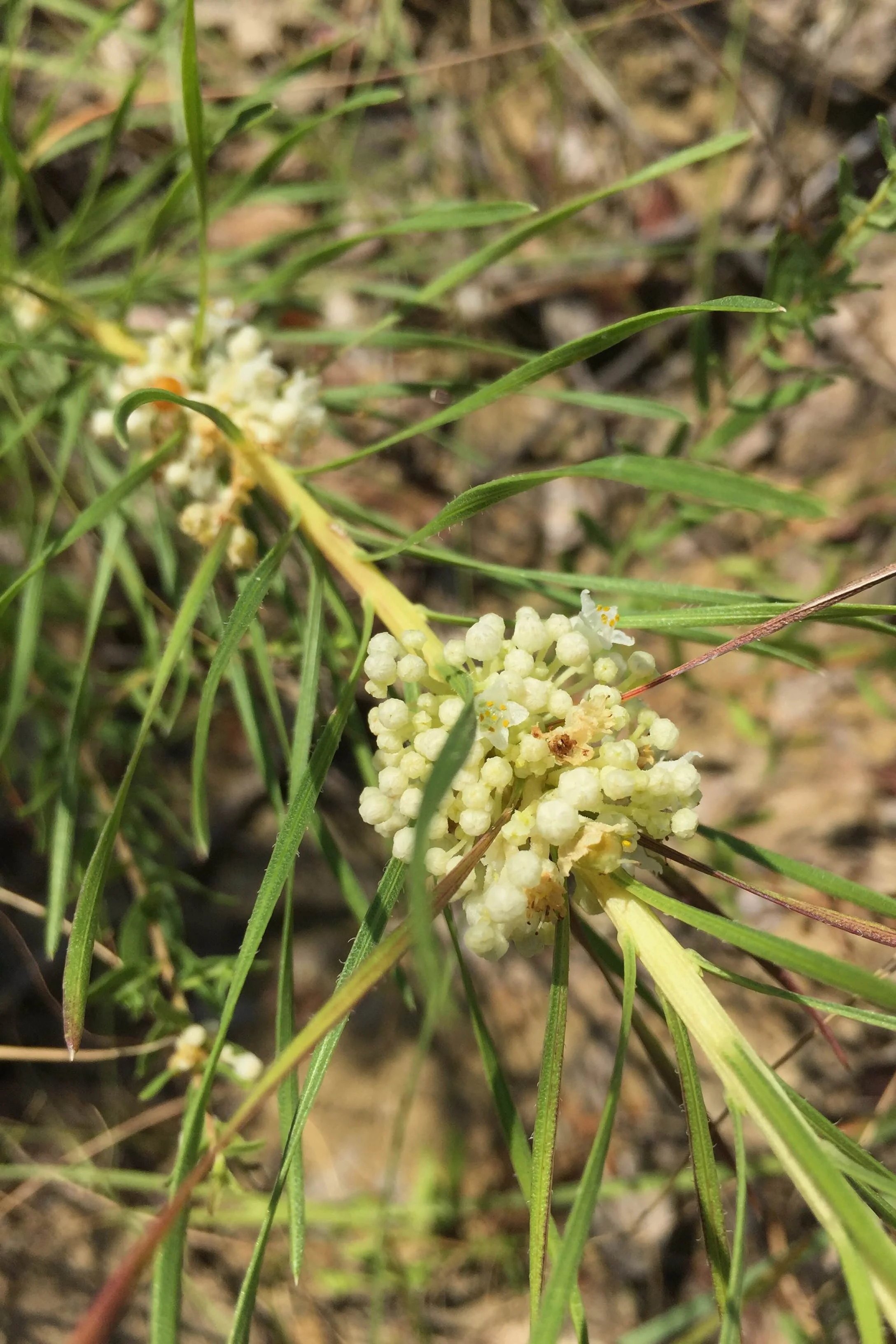
Liatris punctata var. mucronata, Texas Gayfeather with Cuscuta sp., Dodder bloom
In a few weeks, Cement Mountain will be covered in purple-blooming spires of Texas Gayfeather. When I spotted this white bloom midway up the Liatris, I was confused and it made me second guess my initial identification. After consulting with a botanist who specializes in native Texas flora, we confirmed that this is a second plant altogether, vining itself up the Liatris. Dodder is a parasitic plant relying on the Liatris to survive and eventually abandons its own root system entirely. Not surprisingly, it is related to Morning Glory.
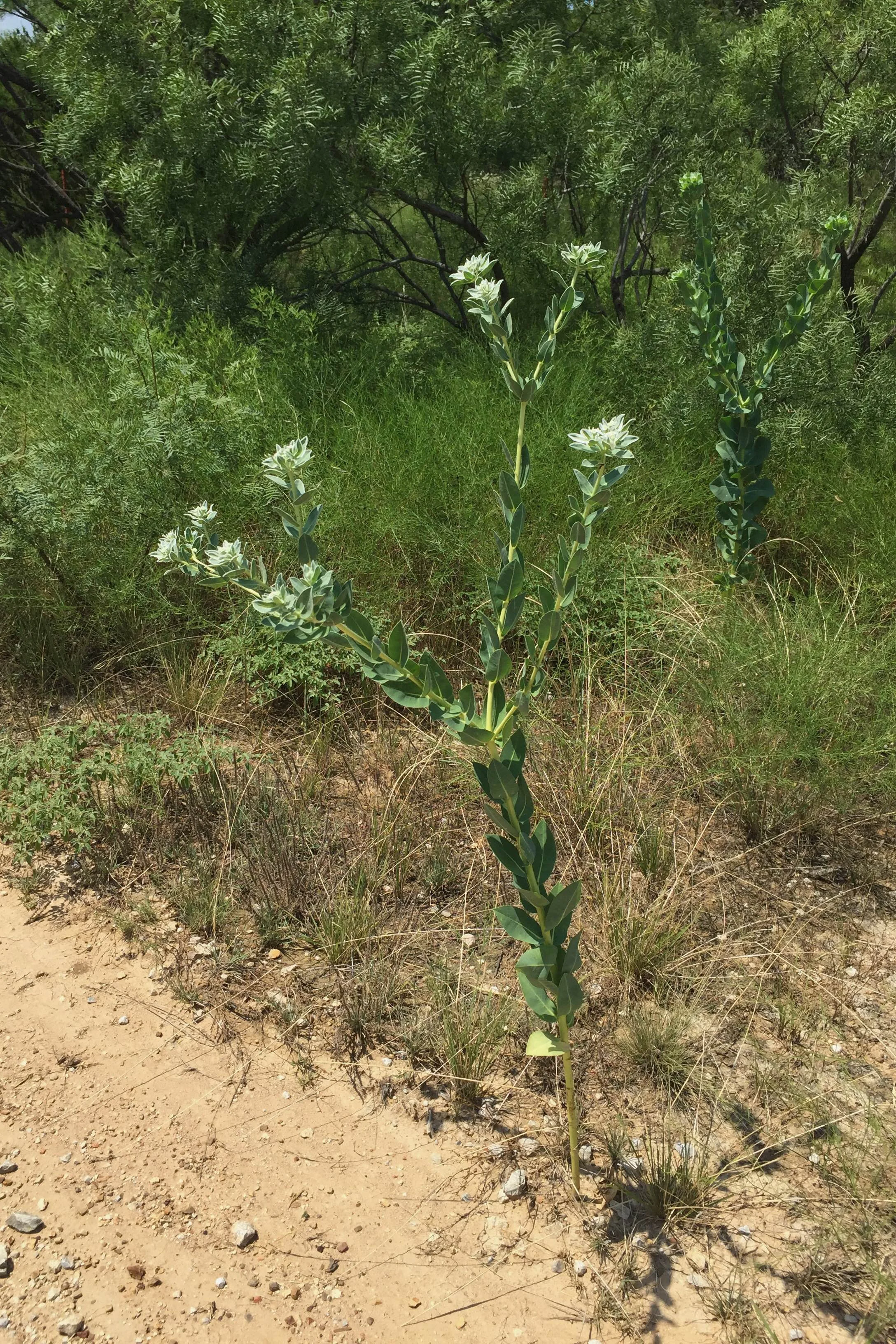
Euphorbia marginata, Snow on the Mountain

Euphorbia marginata, Snow on the Mountain
Euphorbia marginata is probably the largest-growing Euphorbia in the area. This genus is defined by the poisonous, milky sap that "bleeds" from the plant when the tissue is cut. The similarities to a fellow Euphorbia, our holiday Poinsettias, are fairly obvious.
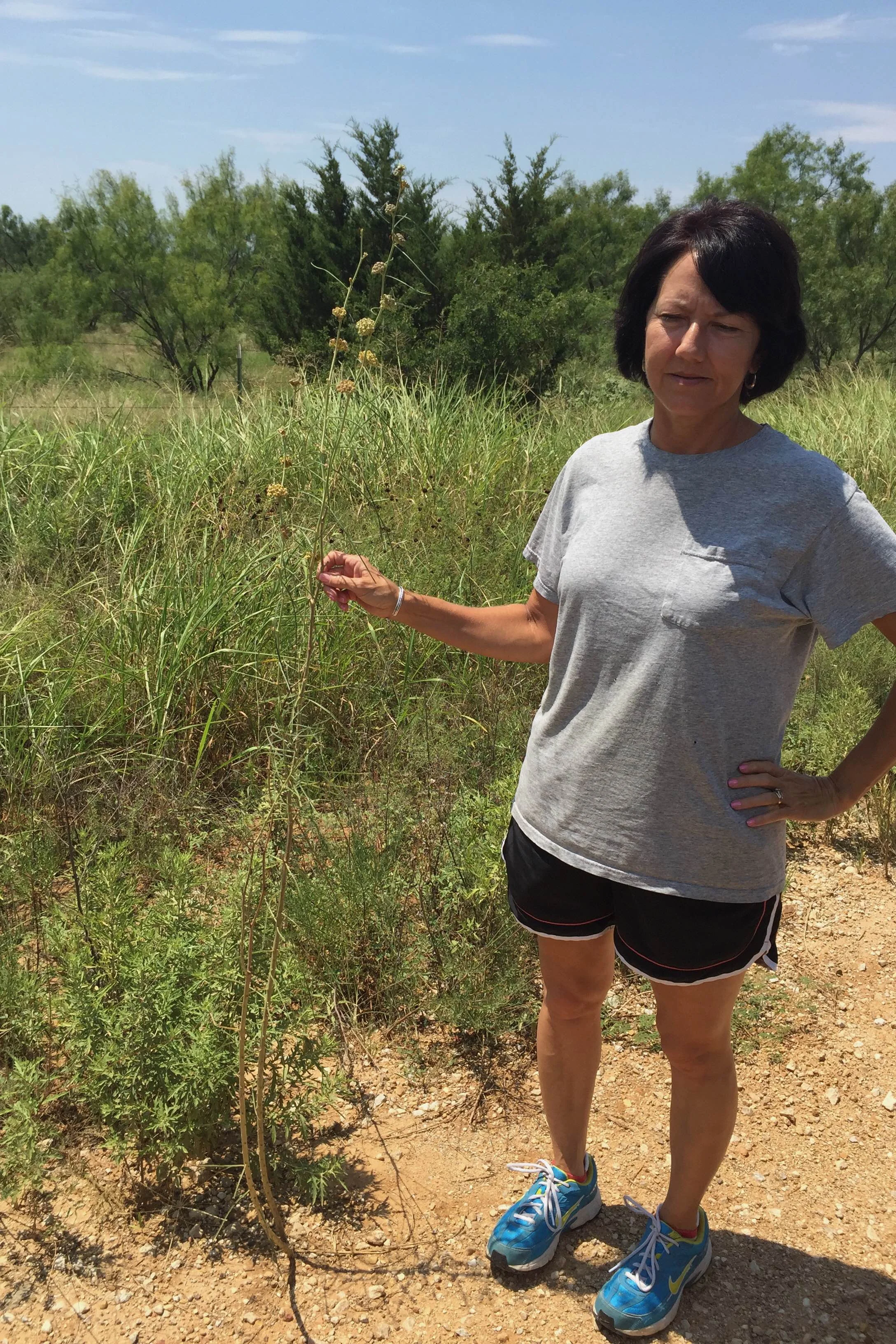
Asclepias engelmanniana, Engelmann's Milkweed
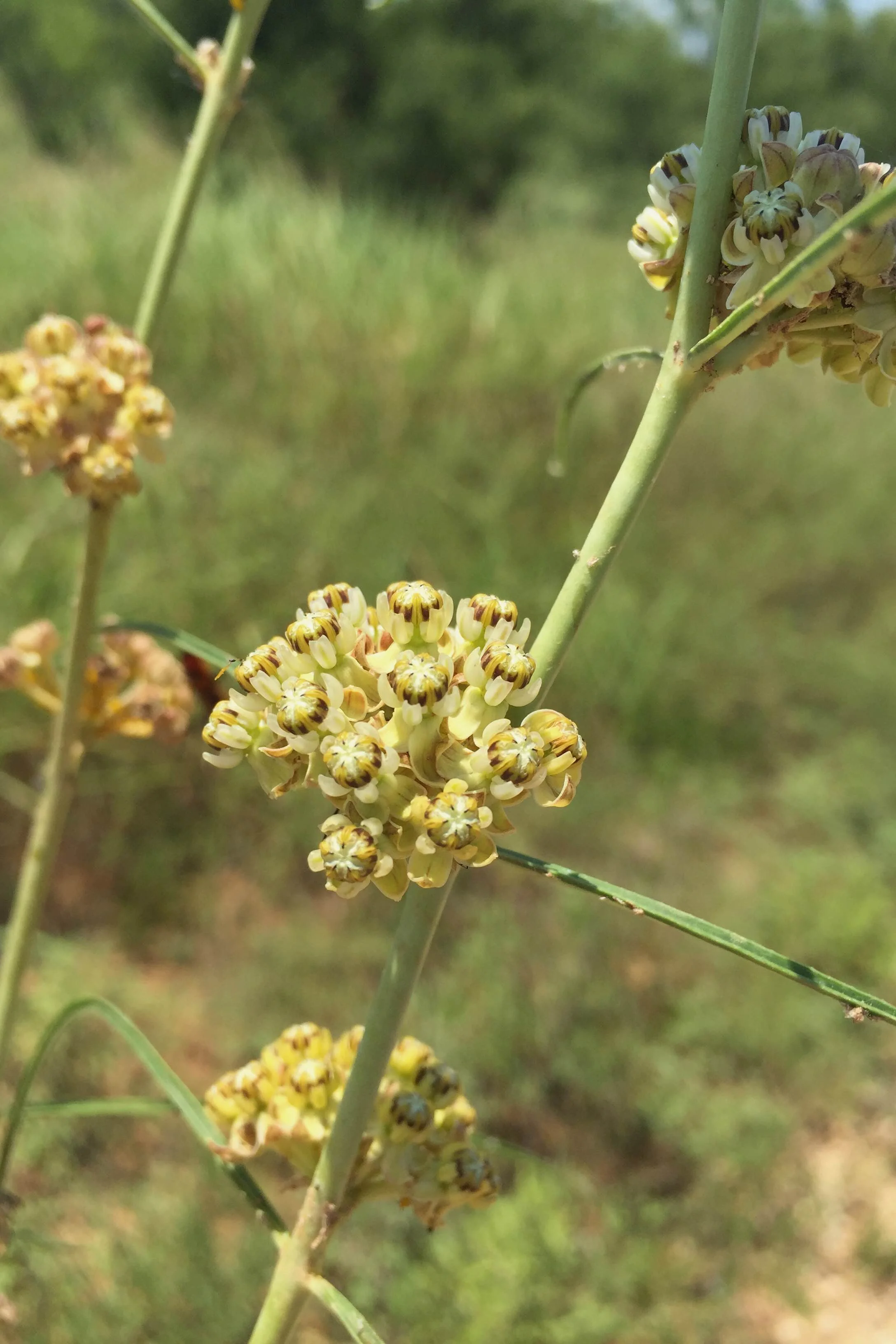
Asclepias engelmanniana, Engelmann's Milkweed
Another "largest", I compelled my mother to pose with this Milkweed specimen to serve as the sense of scale. While not particularly showy, you have to respect it for its height. This species was first identified by George Engelmann, a German botanist who studied flora in Texas during the 19th century, and is listed as endangered in Iowa.

Desmanthus illinoensis, Illinois Bundleflower
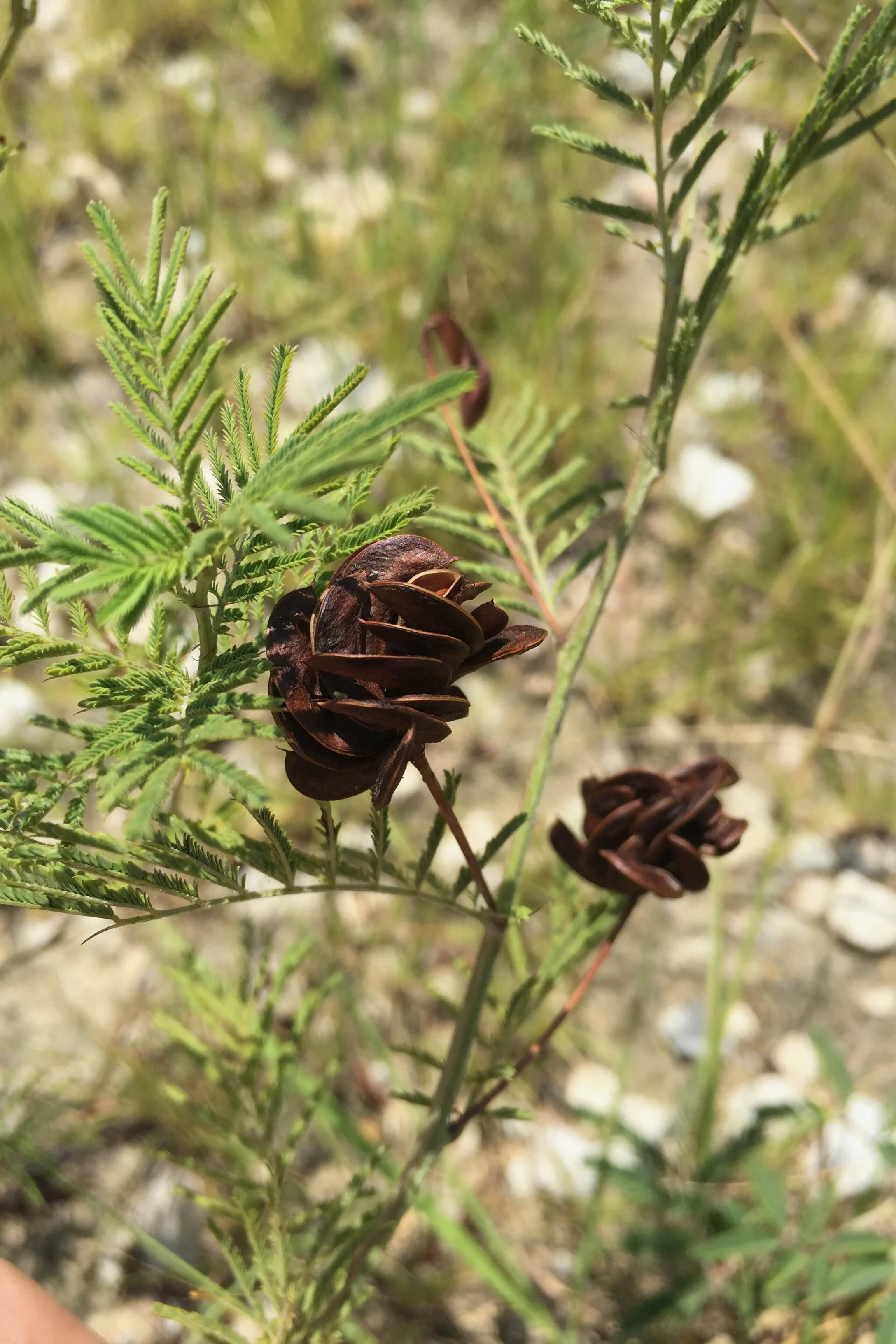
Desmanthus illinoensis, Illinois Bundleflower
Before these brown seed pods, Bundleflower is covered in cream-colored, feathery blooms, much like an Acacia or Mimosa. Even the leaves resemble the previously mentioned genera. But don't worry, this plant is completely thorn-free and soft to the touch.
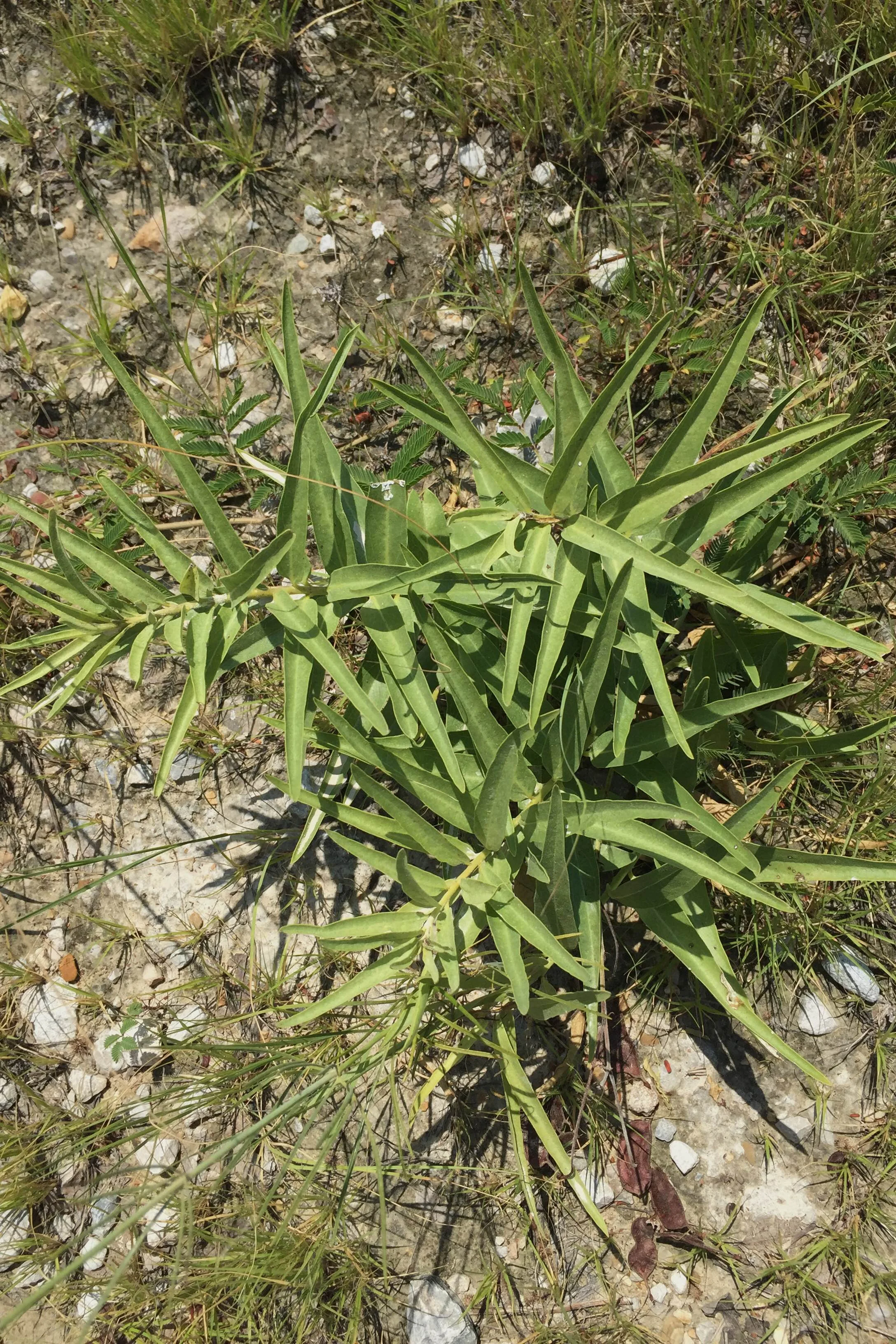
Asclepias asperula, Antelope Horns Milkweed
The fourth and last Milkweed identified on Cement Mountain is Antelope Horns. The flowers are remarkably similar to A. viridis, but the leaves are narrower and the plant grows in a more prostrate fashion. The name is derived from the resemblance of the seed pods to the horns of antelope.