
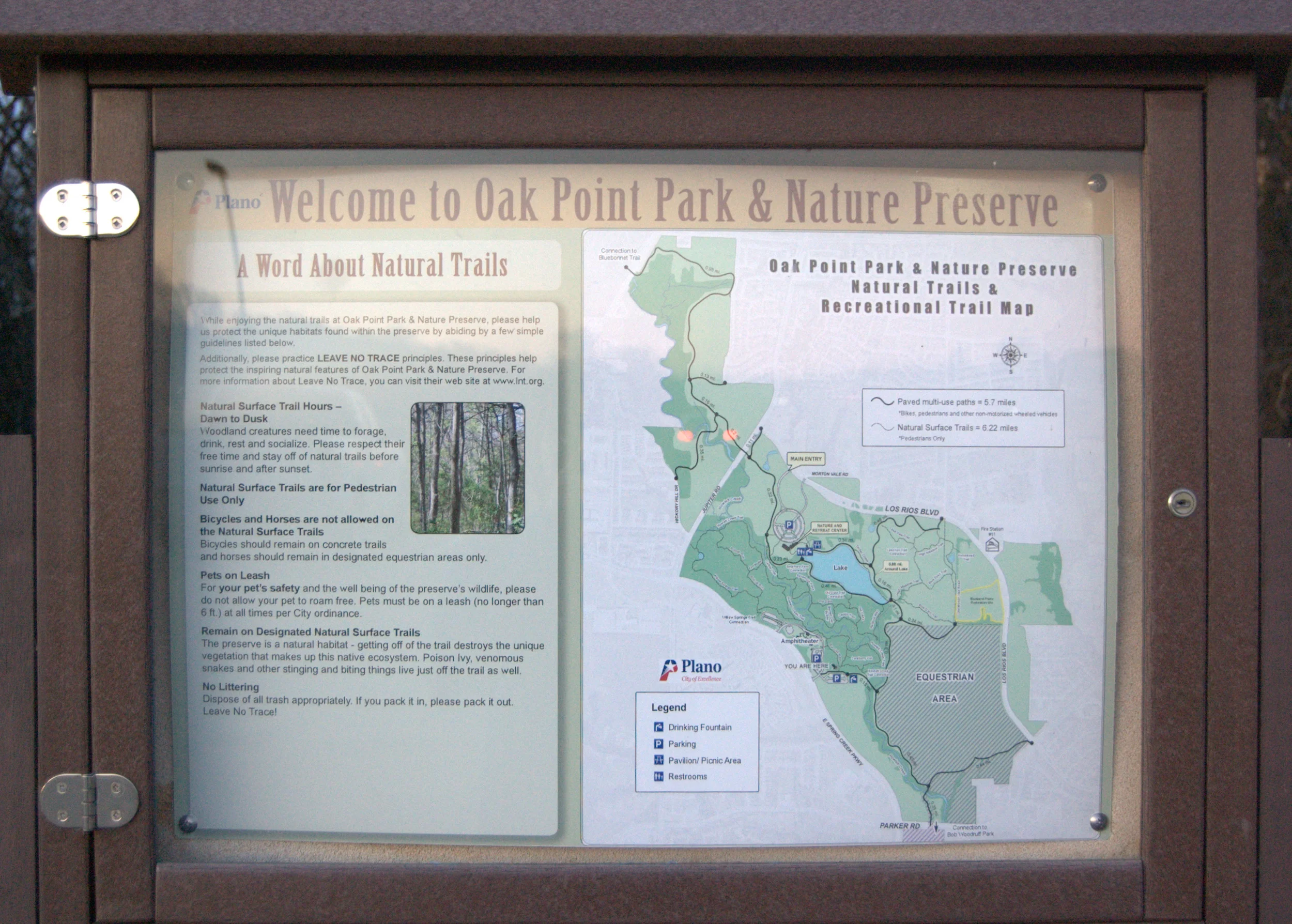
Oak Point Nature Preserve
In Plano, a suburban city in the Dallas metropolitan area, the community has purchased 800 acres of farmland and utility right-of-ways to create a sprawling, multi-use park. The design of the park is great in its simplicity as it's mostly open with run and bike trails. The focus of the park is preserving the land and restoring the property to its pre-human existence. The park is also home to one of the few native prairie remnants still intact in Collin County.
Dormant foliage of summer's past can be interesting and beautiful during cold, winter months, but difficult to properly identify. This post will highlight the prairie plants of Oak Point with identifications when possible.
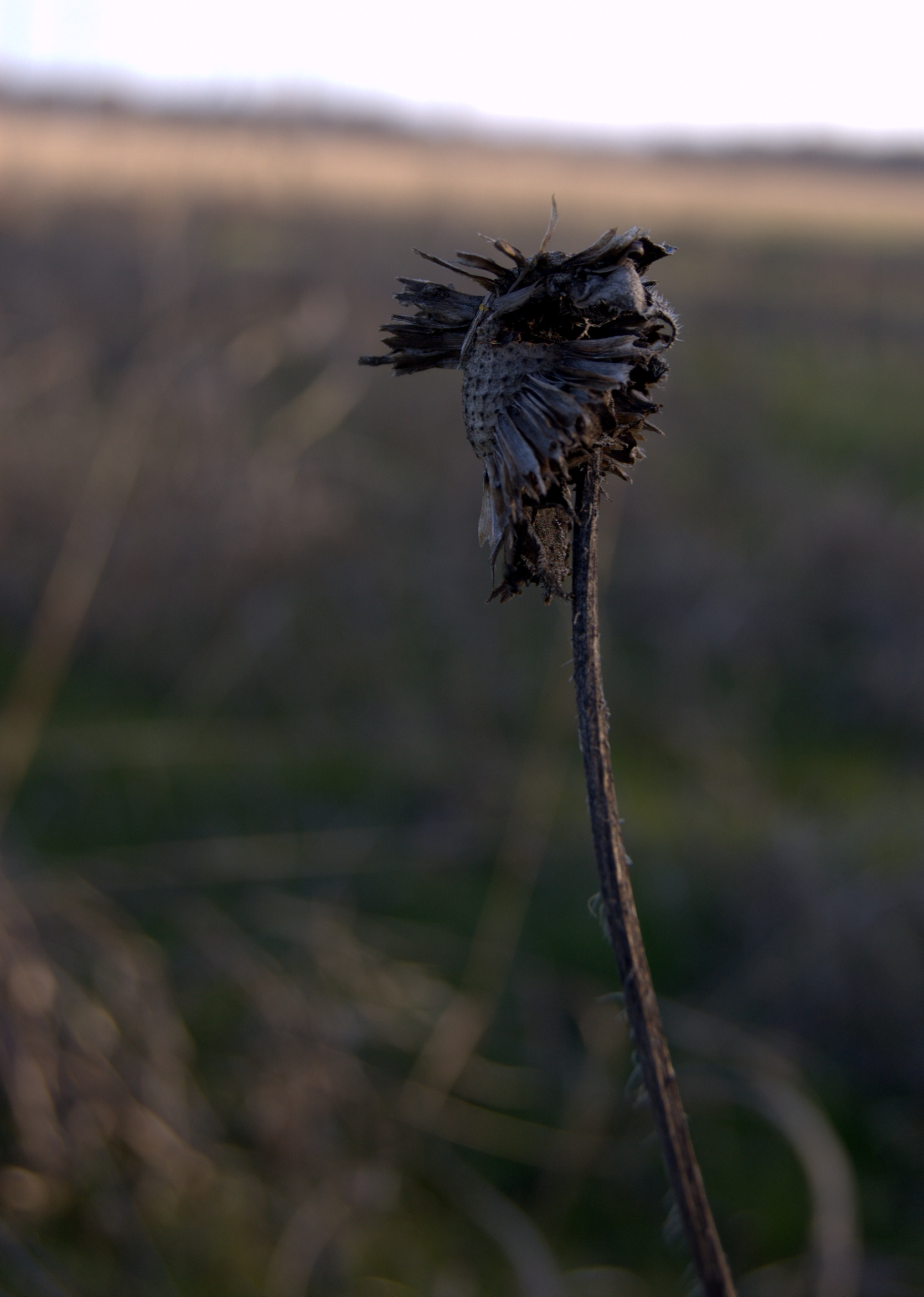
Helianthus sp.
There are at least a half dozen sunflowers native to north Texas. This particular plant was about two feet tall.
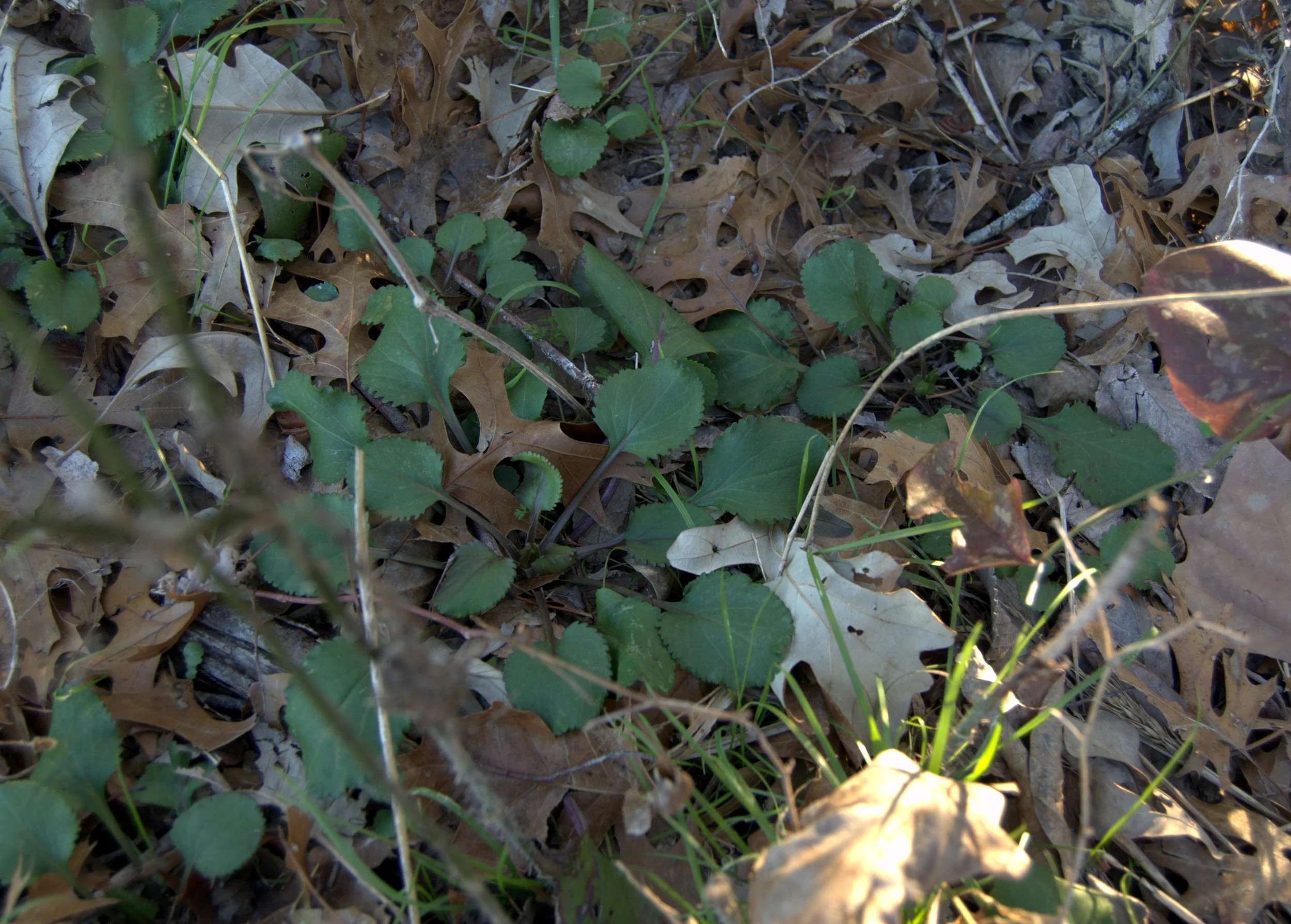
Packera obovata
On the eastern elm forest's edge was a nice community of Golden Groundsel. They do not look like much now, but in a couple of months, these low-growing perennials with shoot up a sea of butter-yellow blooms that will last a few weeks.

Symphoricarpos orbiculatus
Coralberry is a small, woody shrub that bears pink-colored fruit after a heavy flower set in early summer. Primary pollinators of this plant include flies as the flowers do not emit a very sweet scent. These berries provide good forage for birds during the most bare winter months.
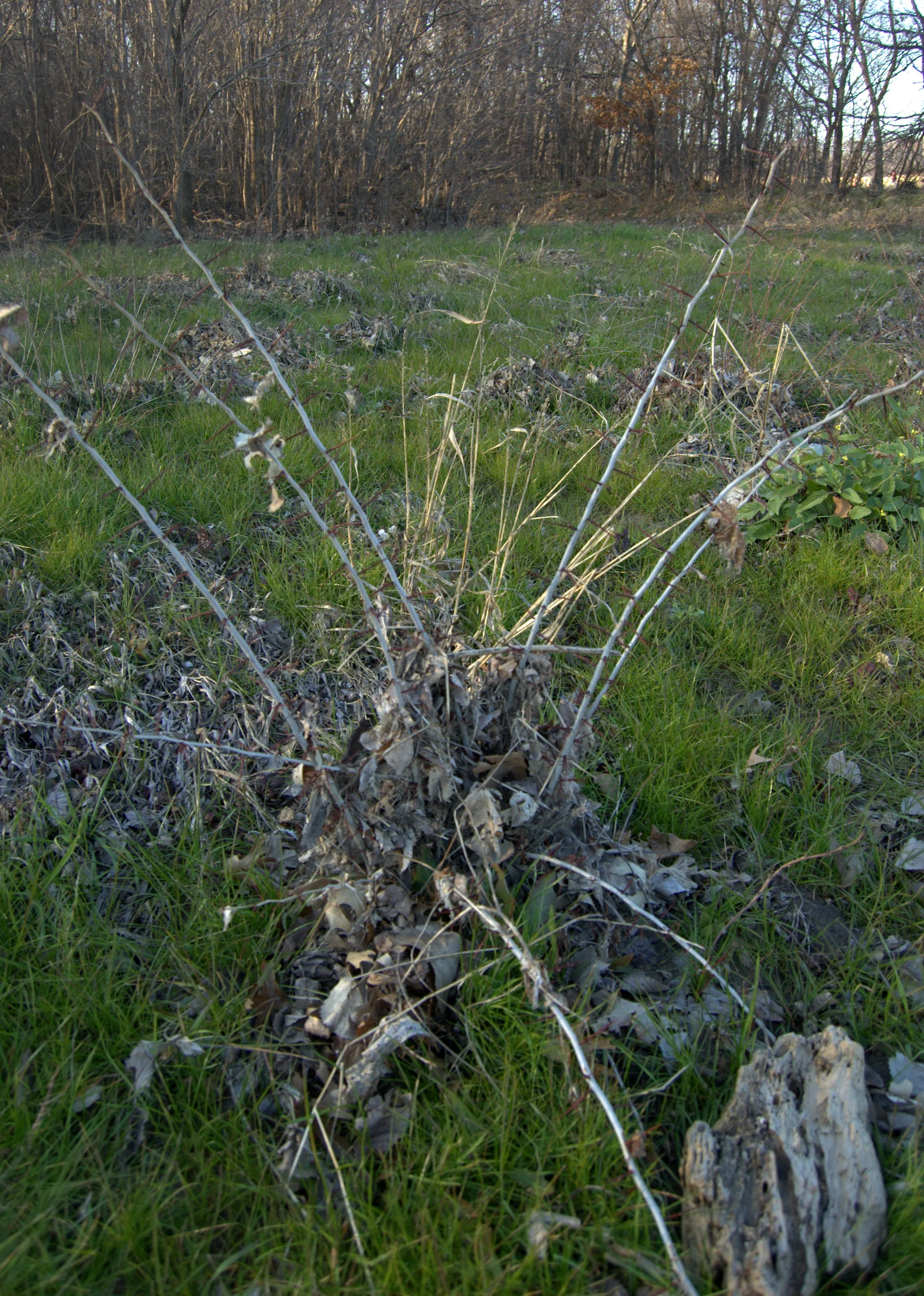
Gleditsia triacanthos
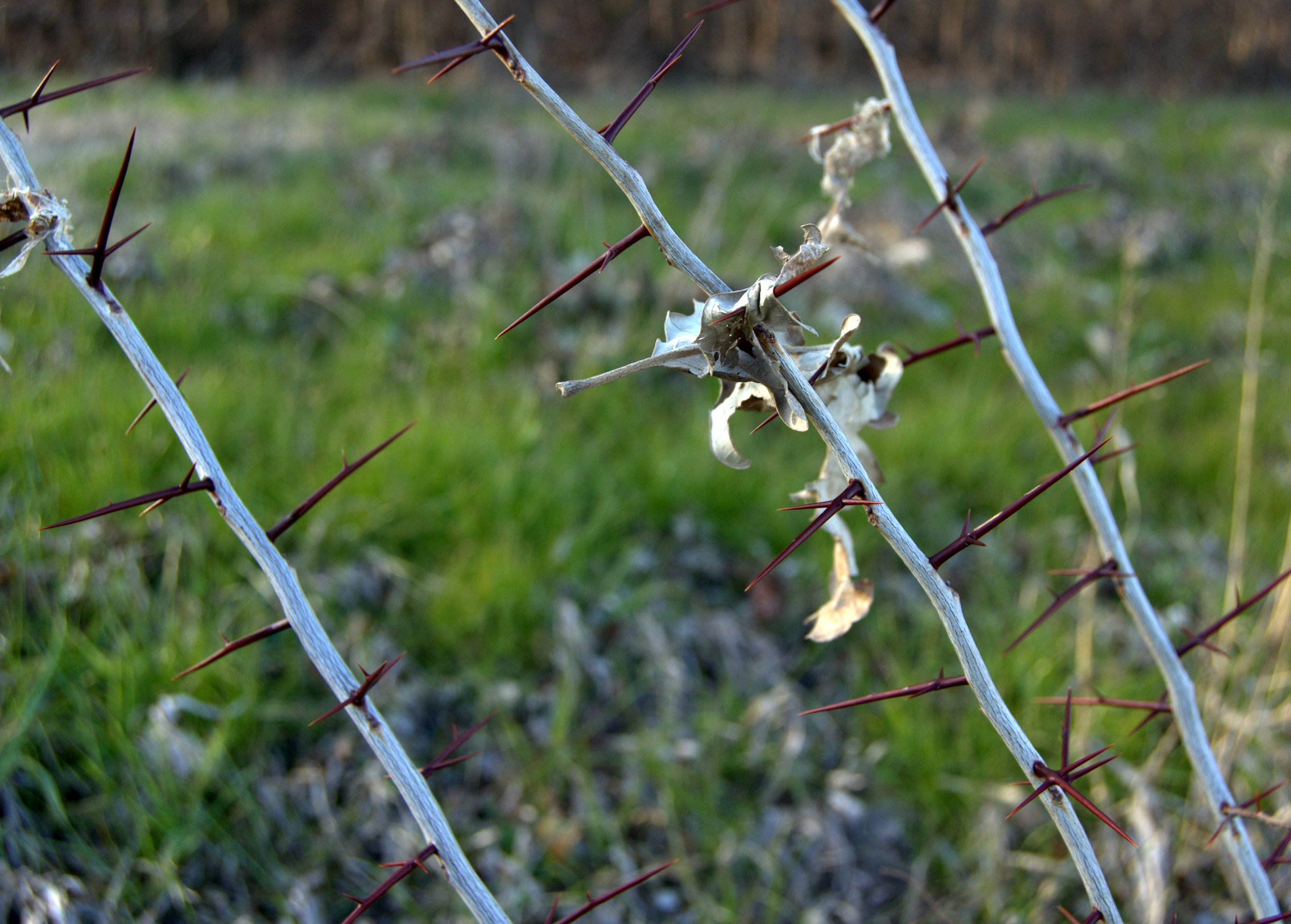
Gleditsia triacanthos
A larger, more mature specimen of Honeylocust was also found at Spring Creek. This particular plant is small and multi-trunked due to periodic mowing by the parks department, most likely. The purple thorns provide a nice contrast to the juvenile, gray stems.
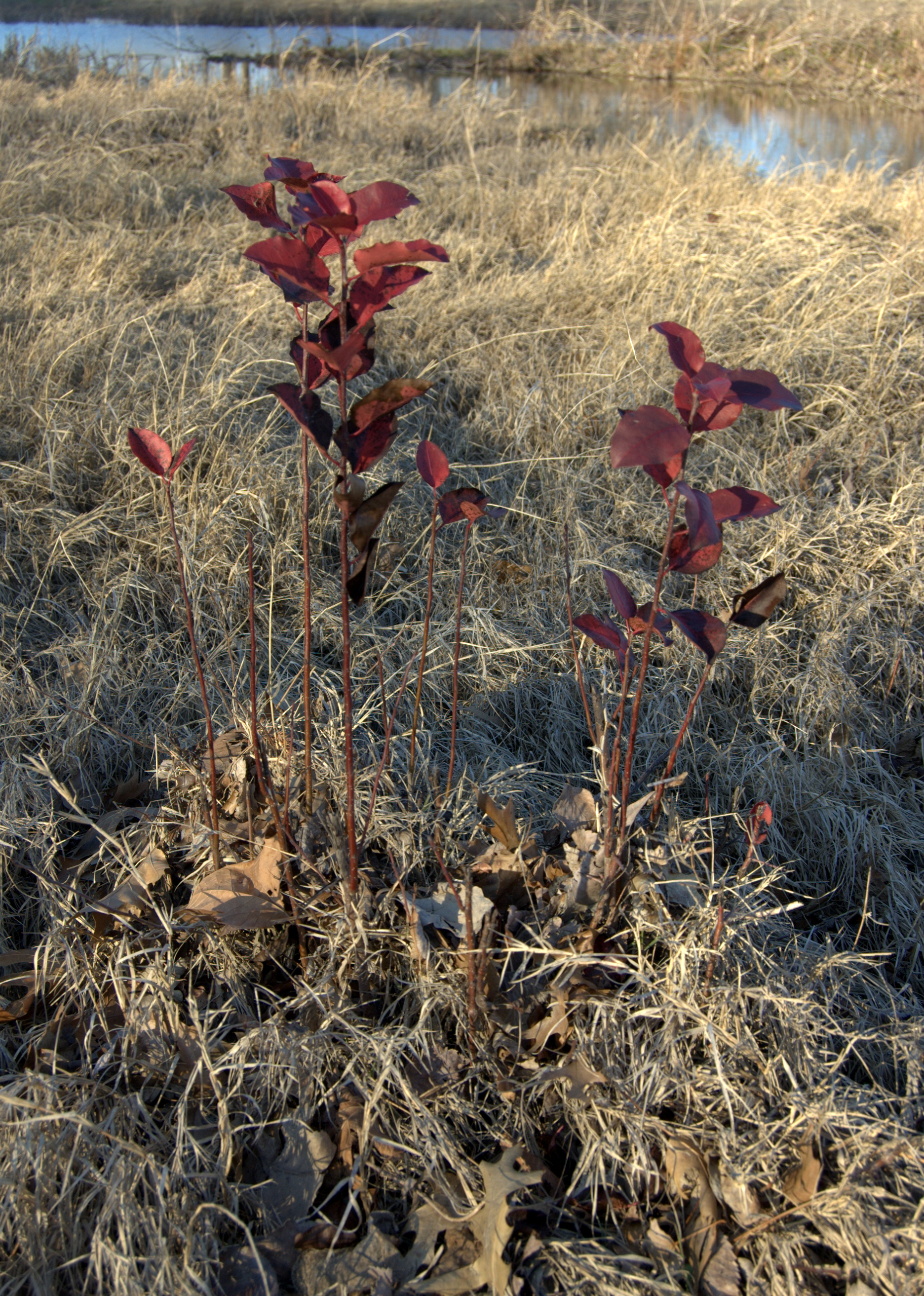
Pyrus calleryana
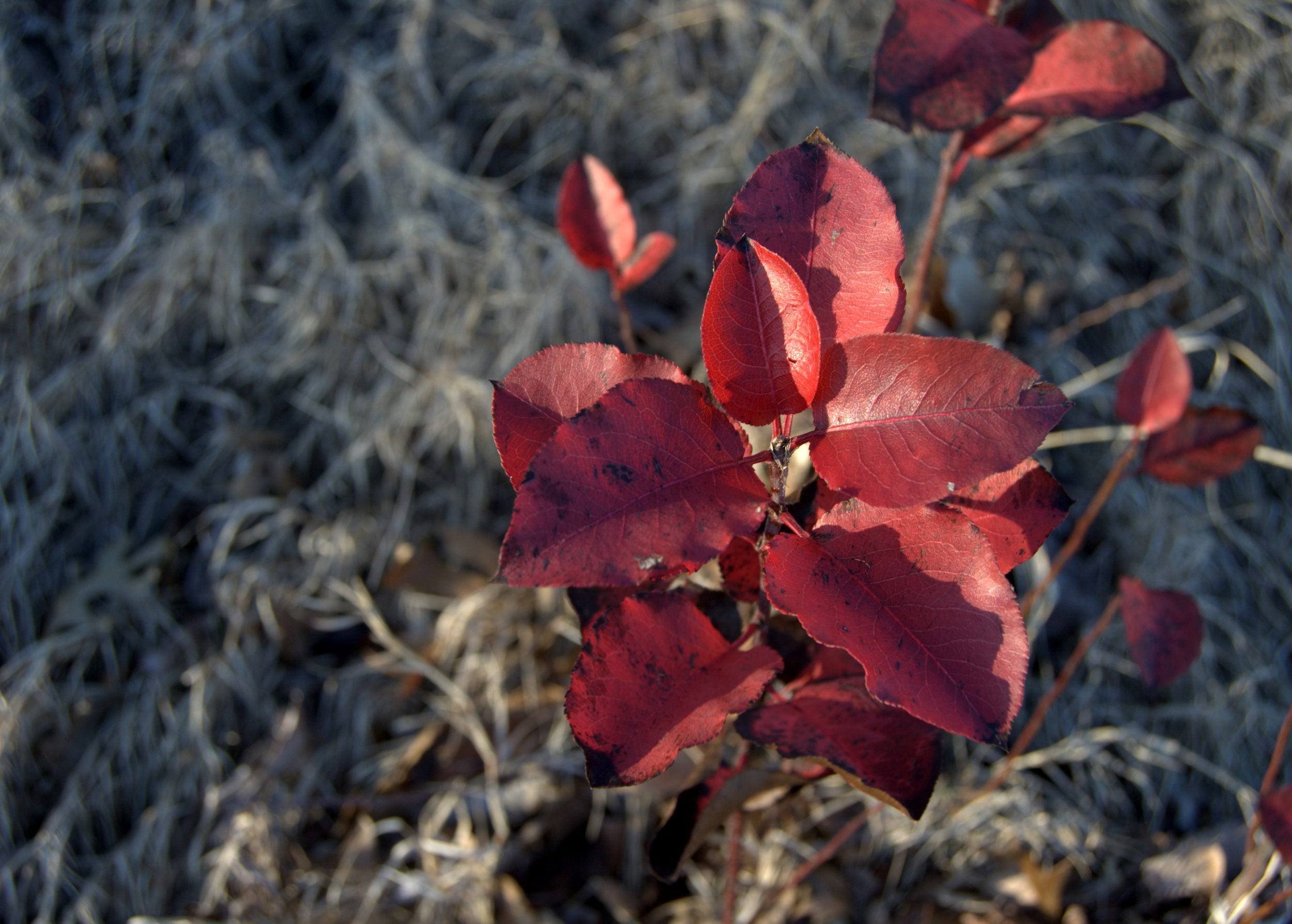
Pyrus calleryana
Even though it is not native to Texas, or even the Americas, this Pear tree has striking winter foliage. Most know this species under the popular variety name 'Bradford'. I would never recommend this tree, though, because of its short lifespan and weak wood. Thank you to Carol Clark for helping me identify this non-native.
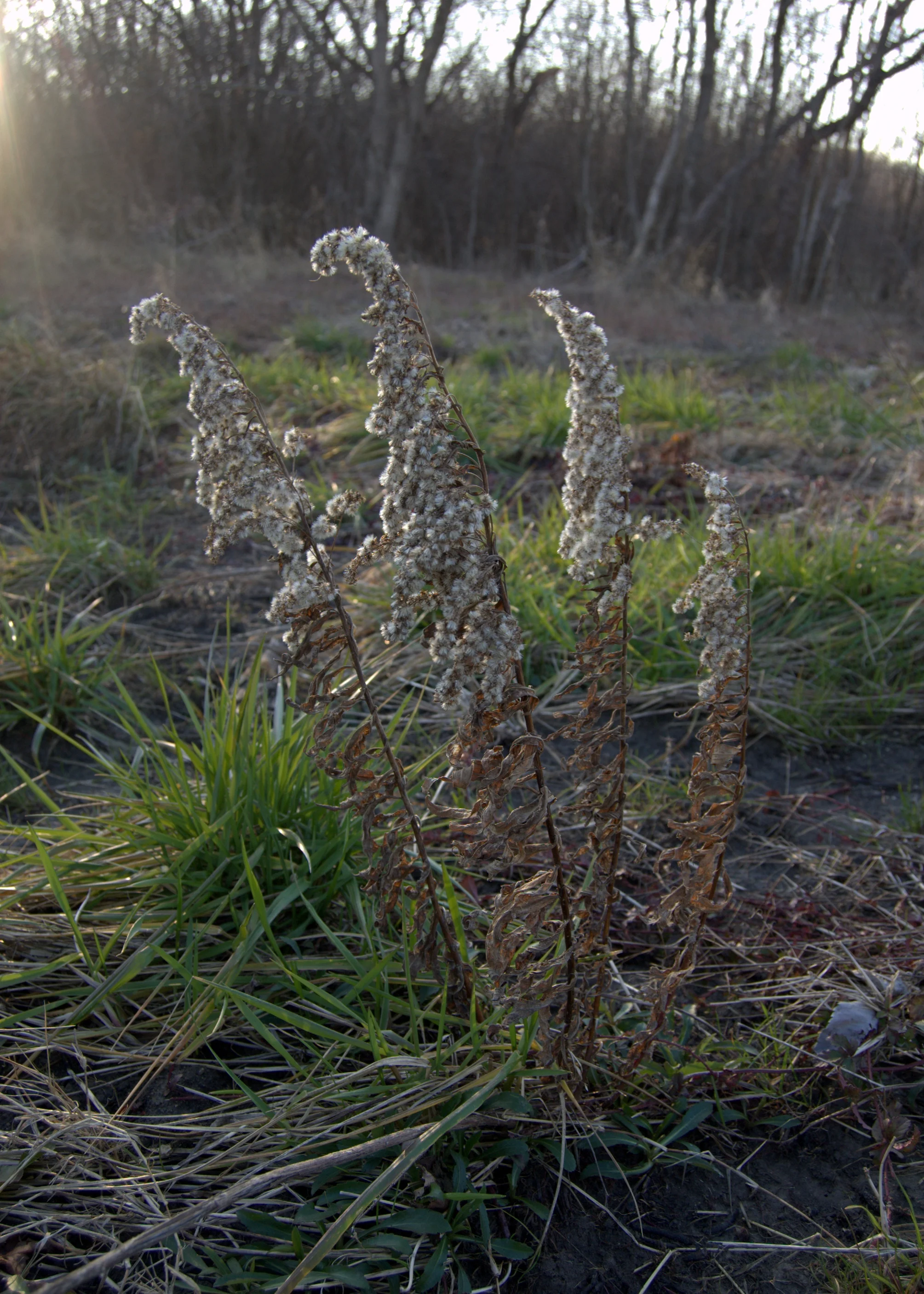
Symphyotrichum ericoides var. ericoides
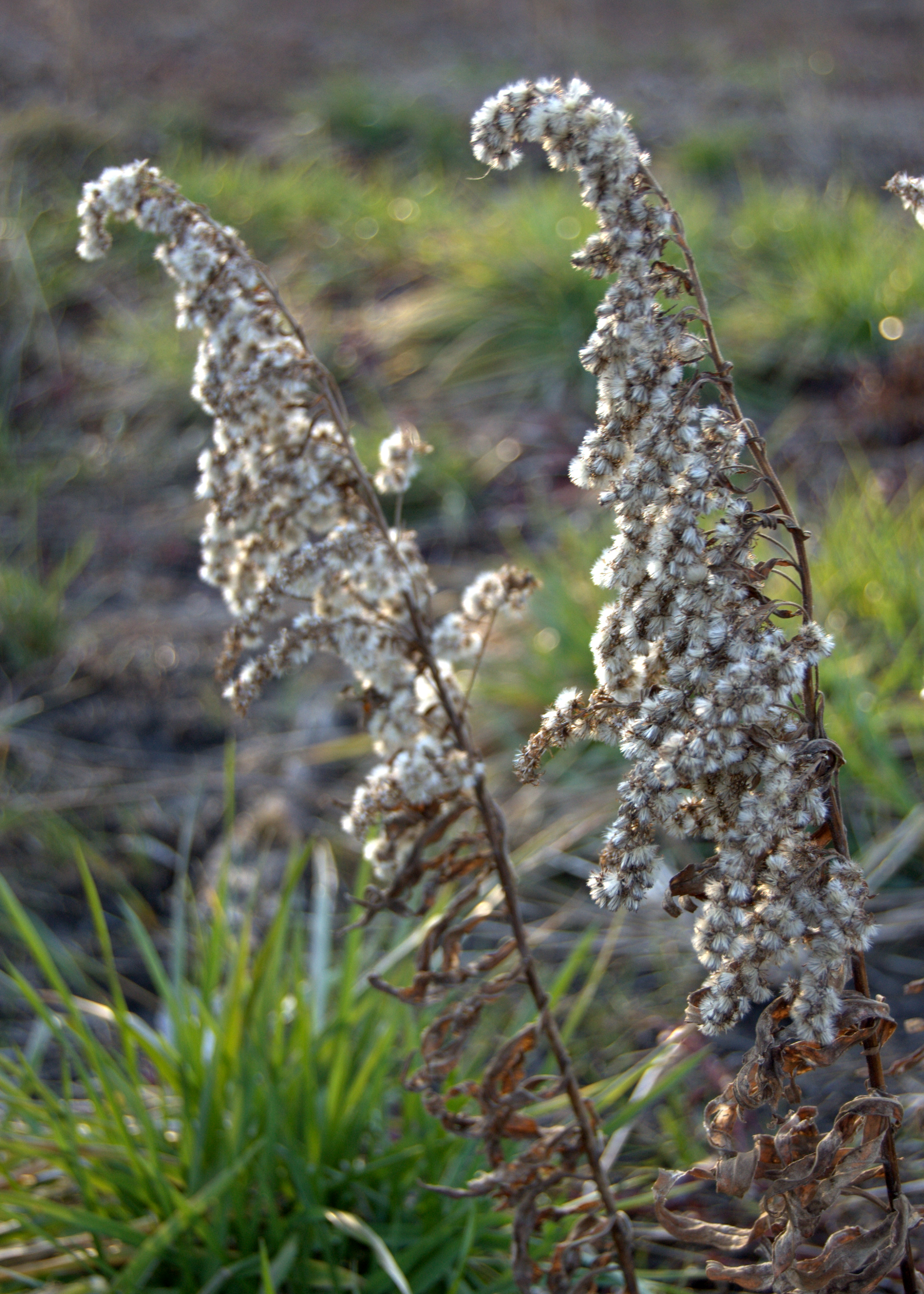
Symphyotrichum ericoides var. ericoides
Heath Aster begins to bloom in the heat of summer and continues into the fall with plumes of white flowers. They leave behind these striking risers of seeds covered in white filament. Also to consider is the possibility of this plant being a species of Solidago, or Goldenrod. Either are desirable for a pollinator garden.
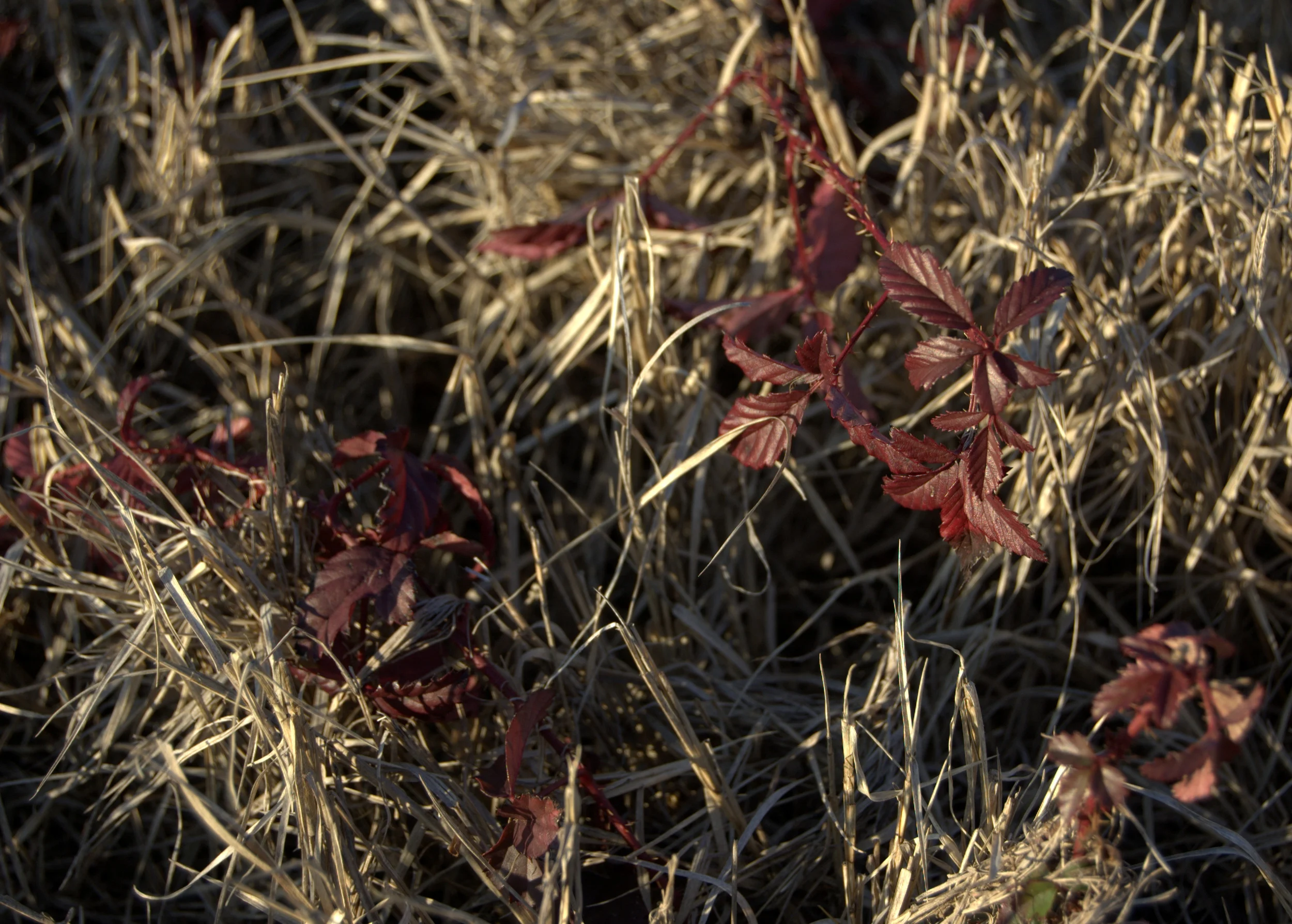
Rubus trivialis
Dewberry is most recognizable when blooming its white flowers in the spring. I had almost mistaken this for Virginia Creeper until I studied the leaves more closely and realized the likelihood of Dewberry growing in this field is much higher.
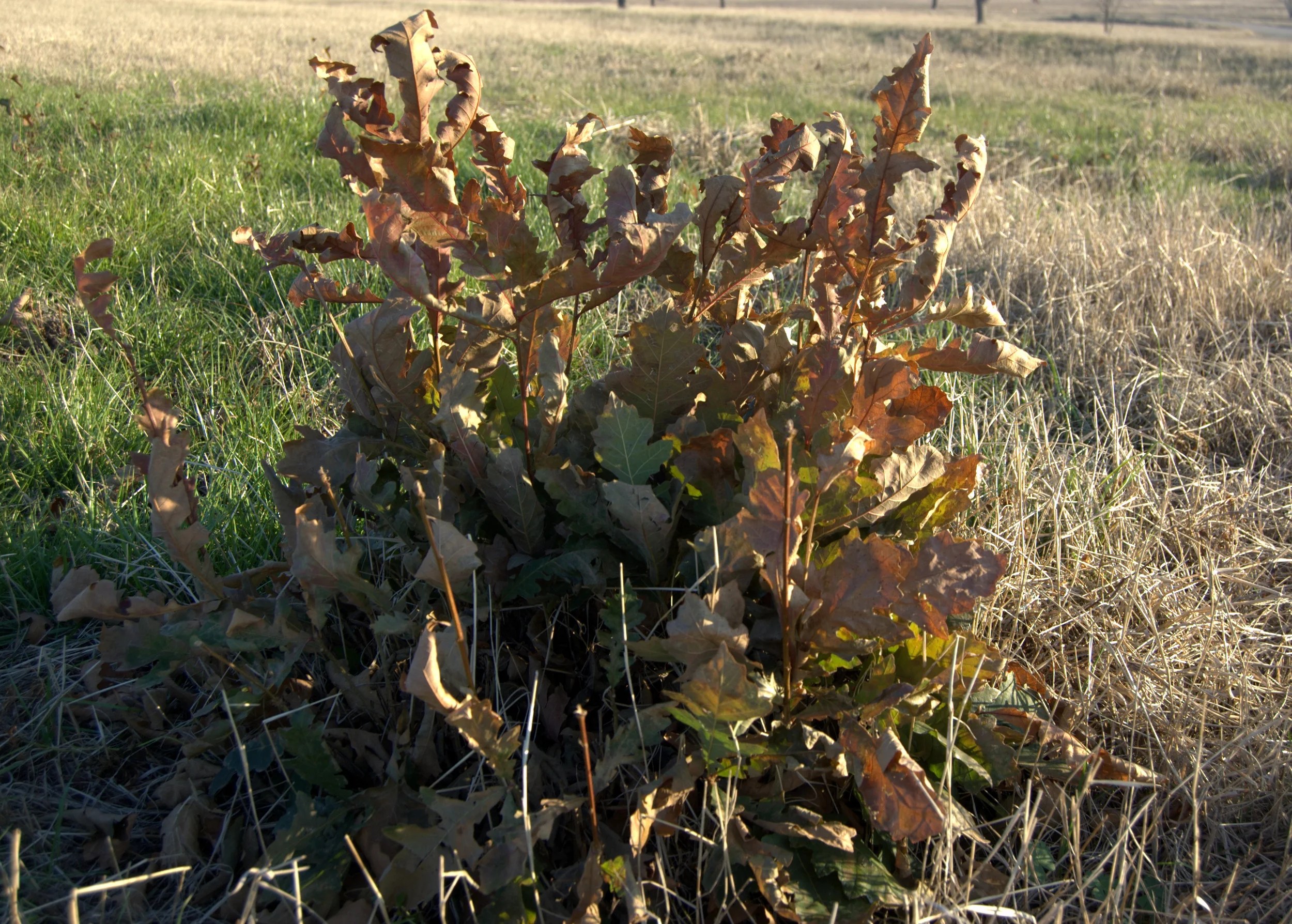
Quercus macrocarpa
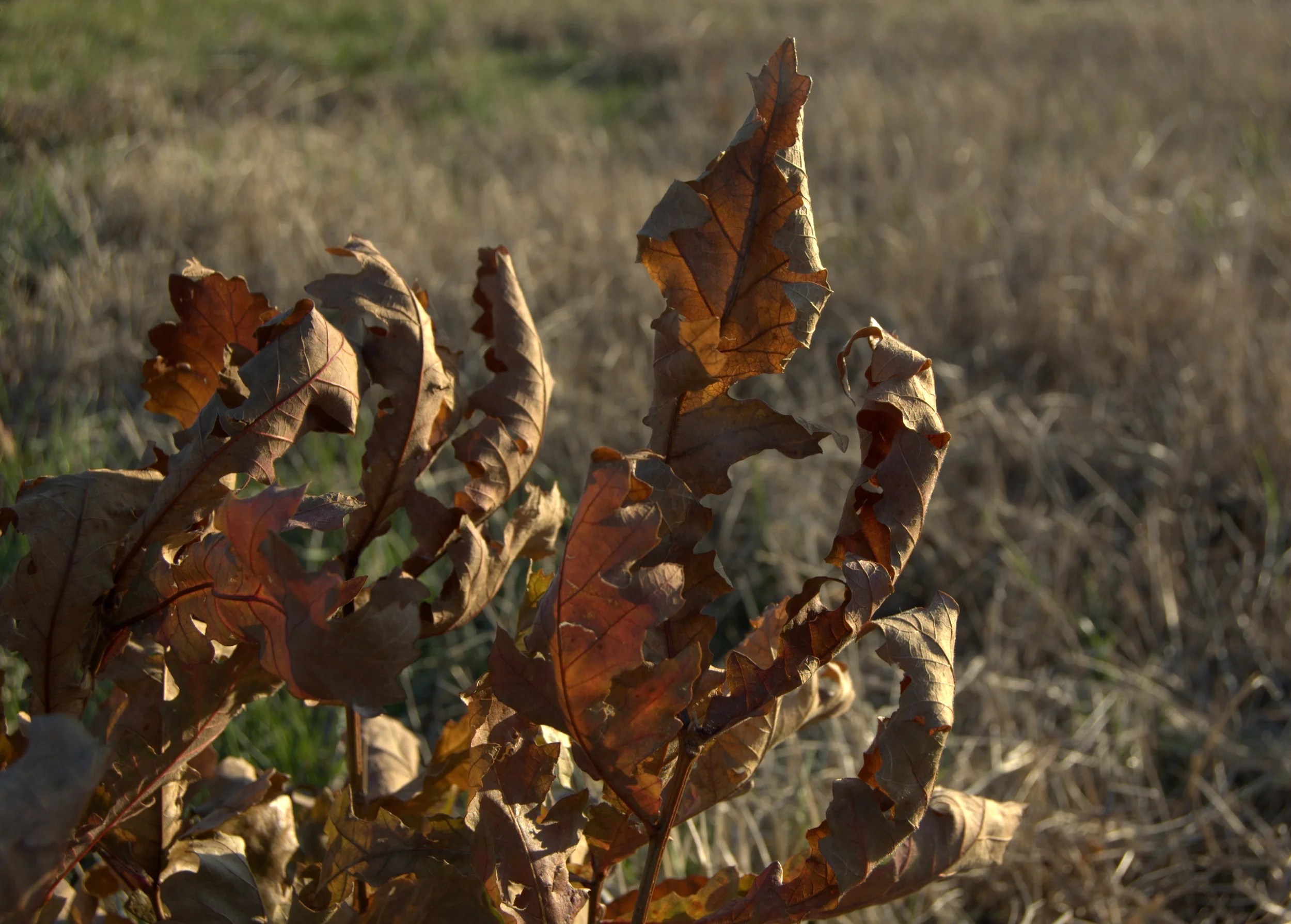
Quercus macrocarpa
Another victim of the periodic mowing of this prairie is a Burr Oak. This Quercus species is typically found along sandy river banks or other sources of water. They produce golf-ball sized acorns and can grow as tall as 100 feet.
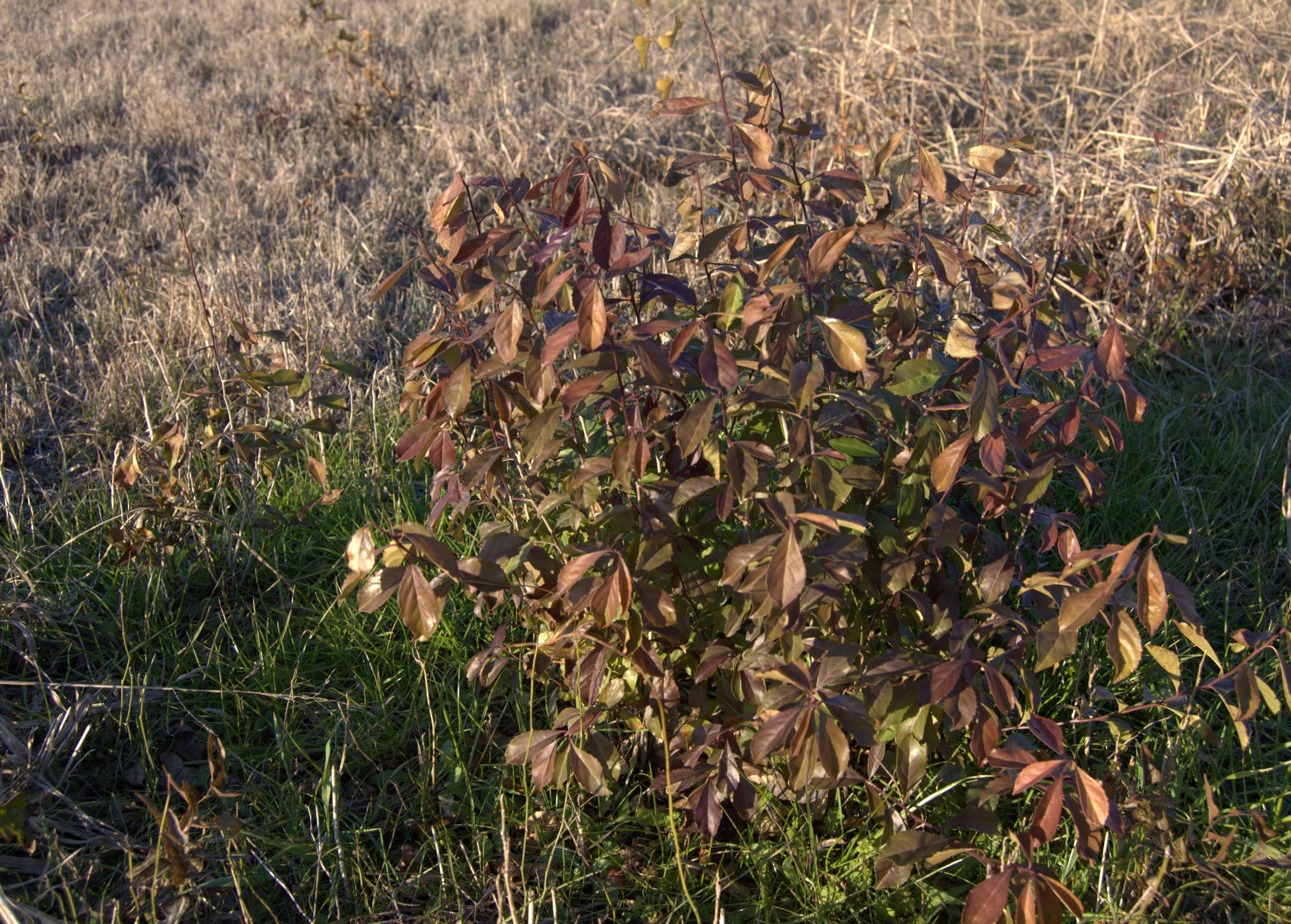
Prunus sp.
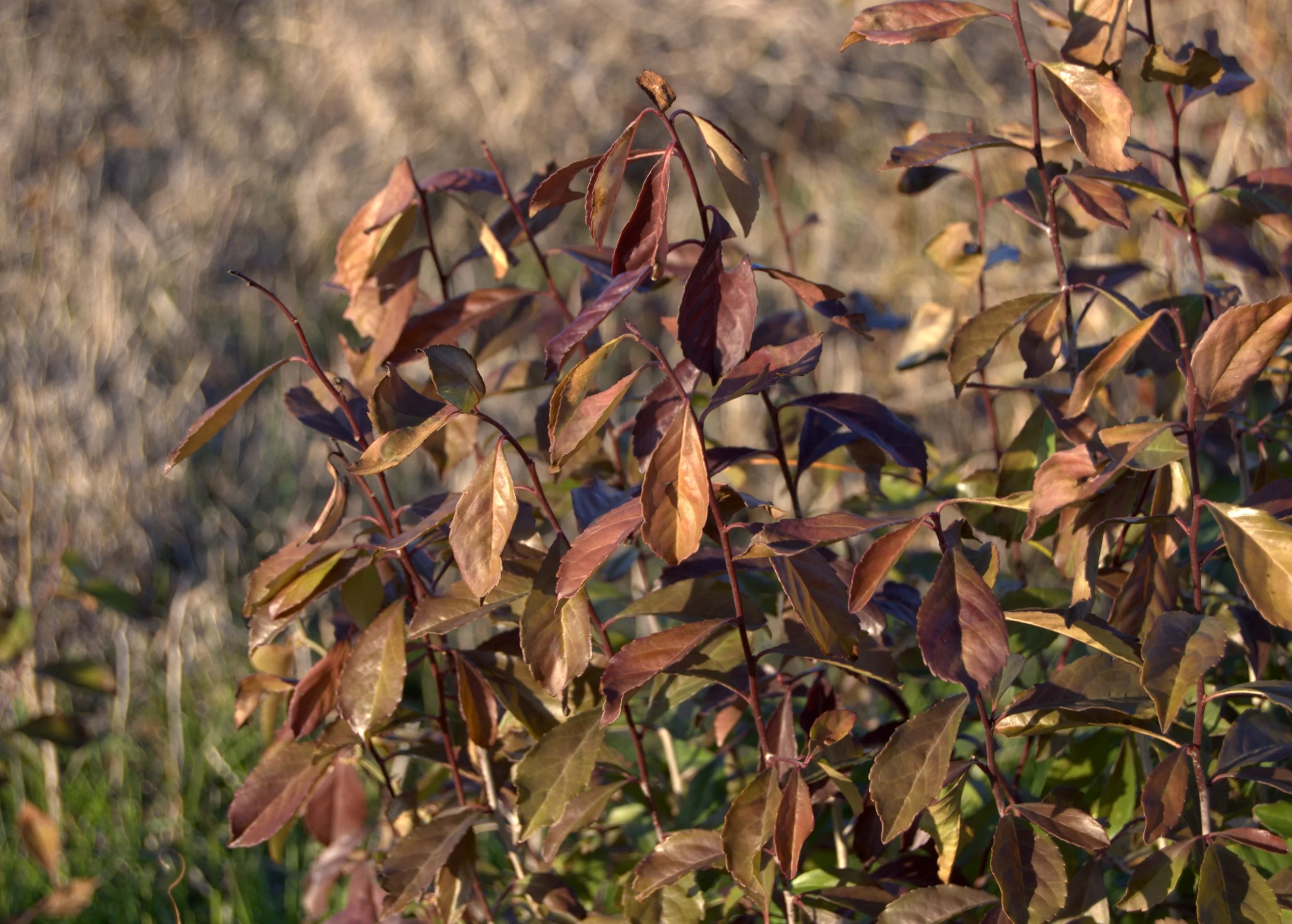
Prunus sp.
Plums are one of the most reliable edible fruit producers in north Texas. The winter foliage is nice, too. Again, this specimen would be larger if the mower avoided it.

Tridens albescens
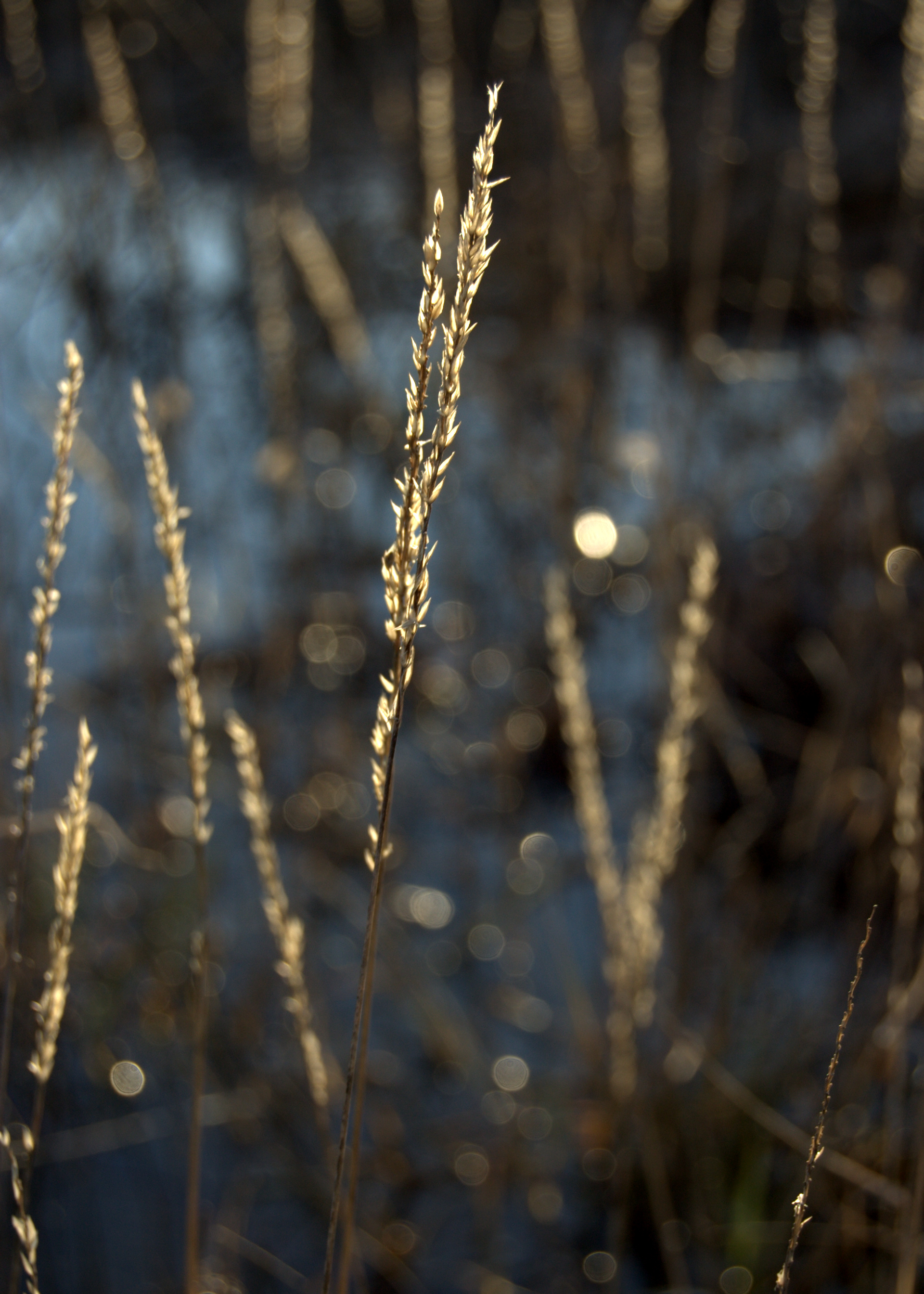
Tridens albescens
The panicle of White Tridens begins as green in the spring, turning purple in the summer, and eventually white in the winter. It is often found where mowing practices are enforced. This population found a palatable home in the moist area on the front side of a diversion dam used for erosion control.
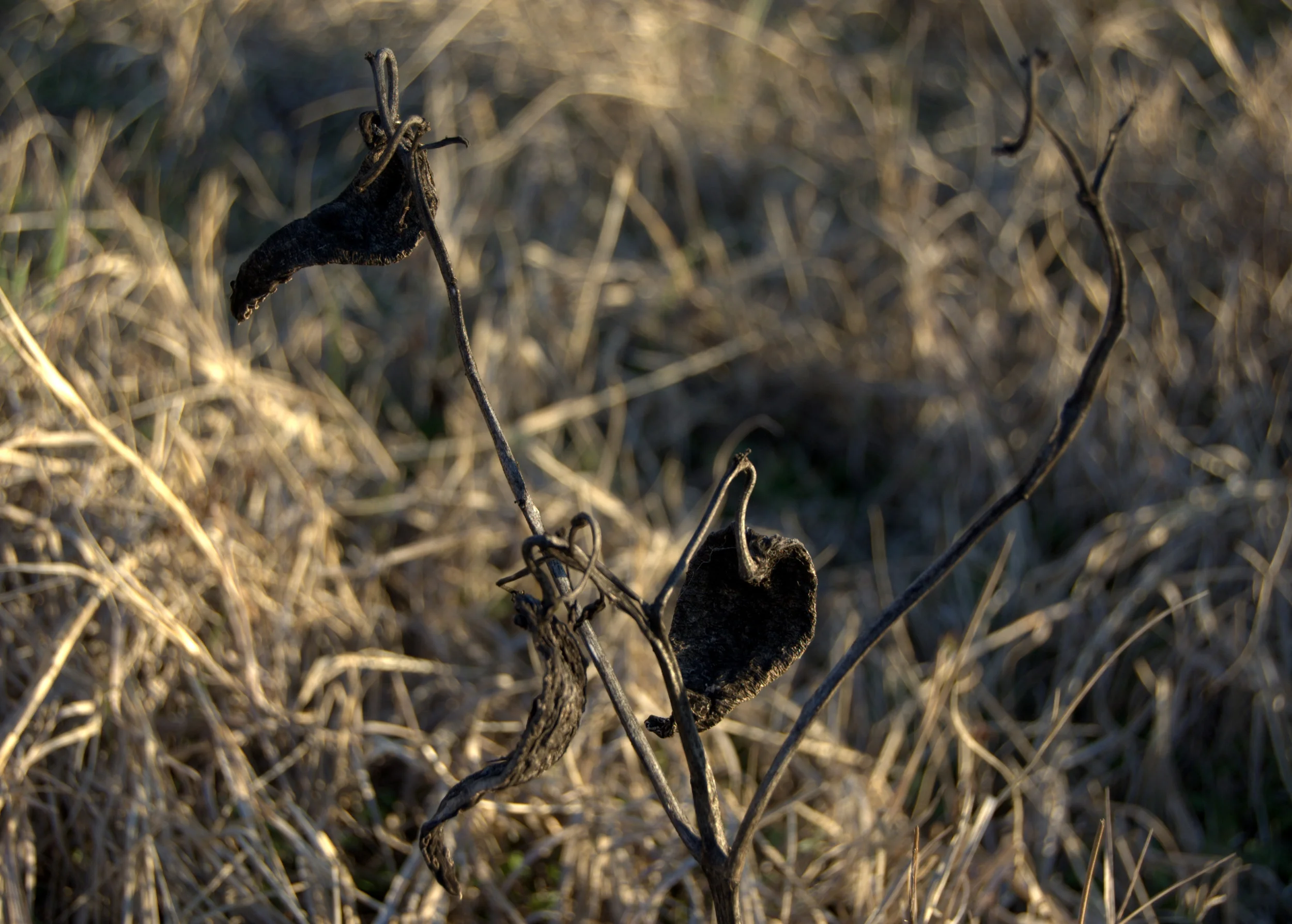
Asclepias sp.

Asclepias sp.
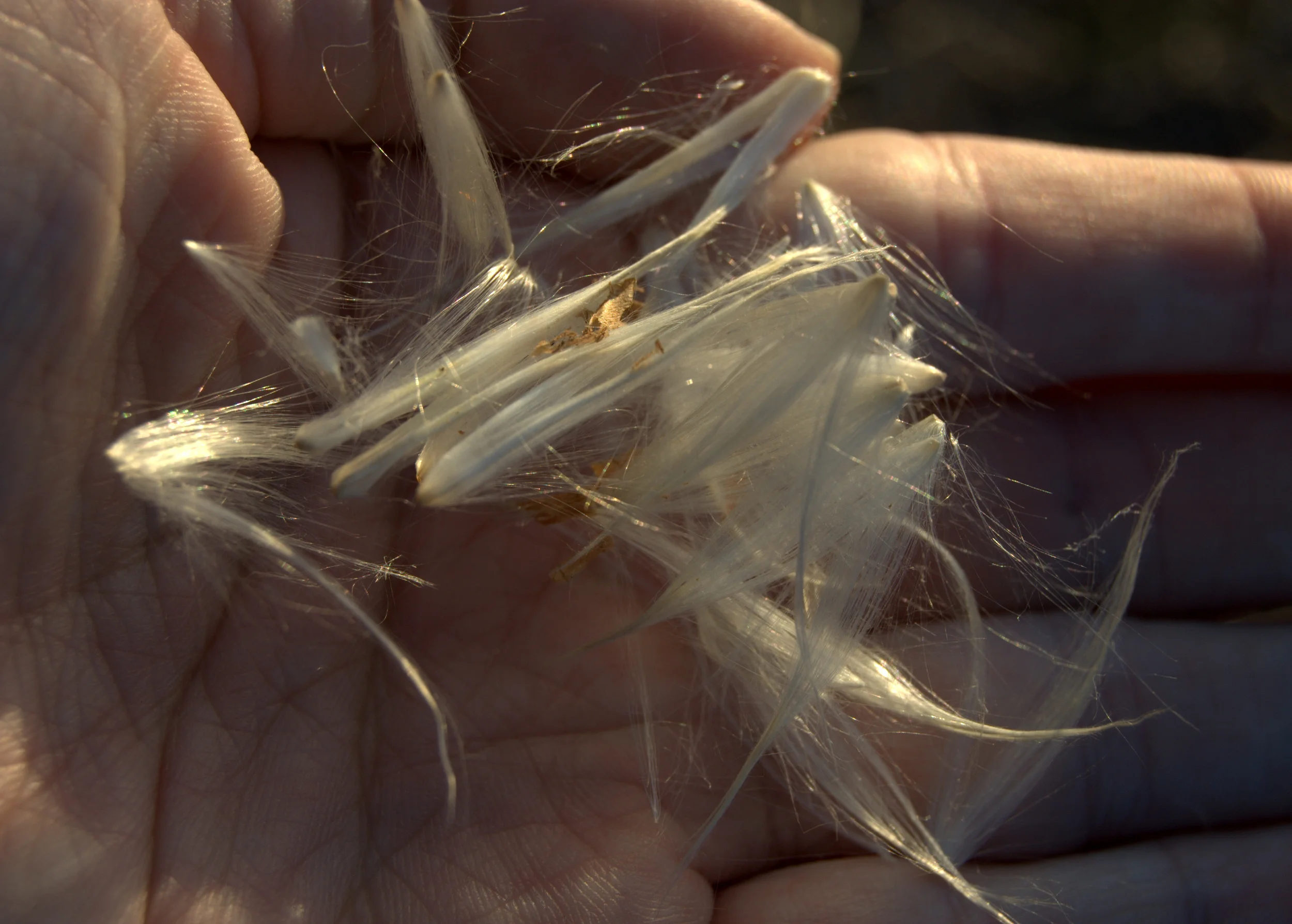
Asclepias sp. seed
This was one of only a few Milkweed stalks that have survived the mowing. In particular, one seed head had not let go of its seed. I helped it along a bit. The long, white hairs help carry the seed along slight winds.
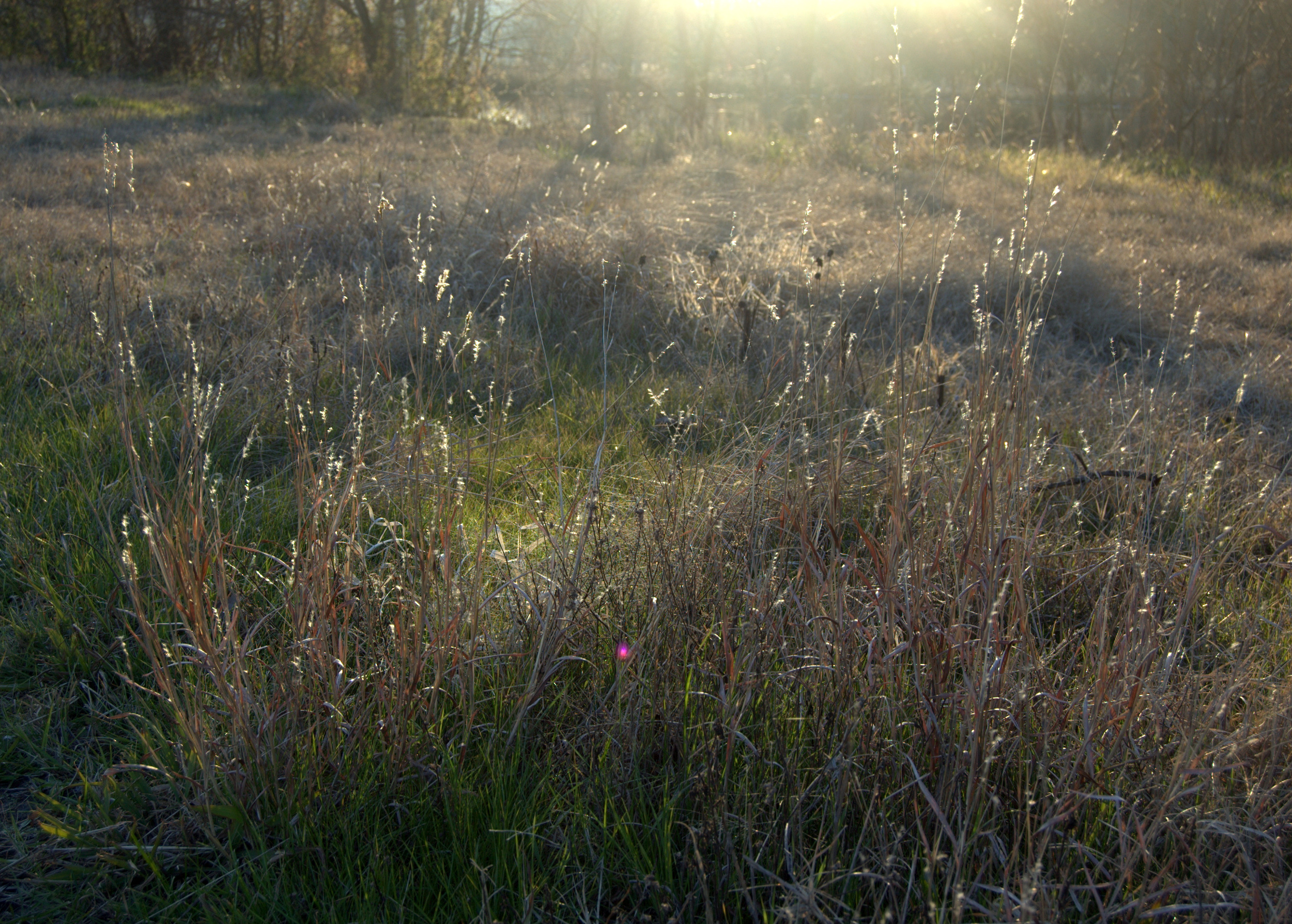
Bothriochloa laguroides

Bothriochloa laguroides
Silver Bluestem is another native grass that puts on a decent show in the fall with its reflective spikelets.
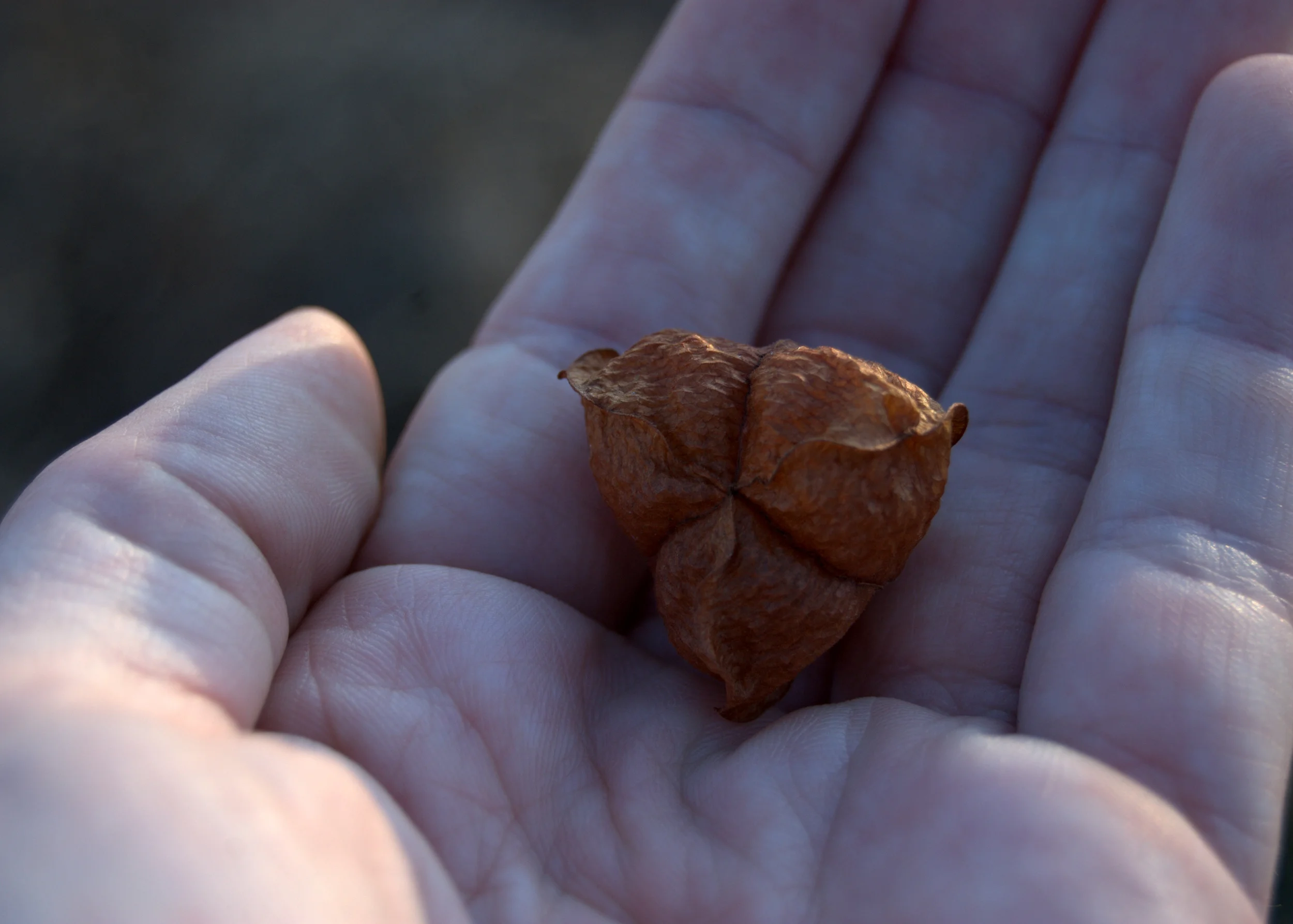
Cardiospermum halicacabum
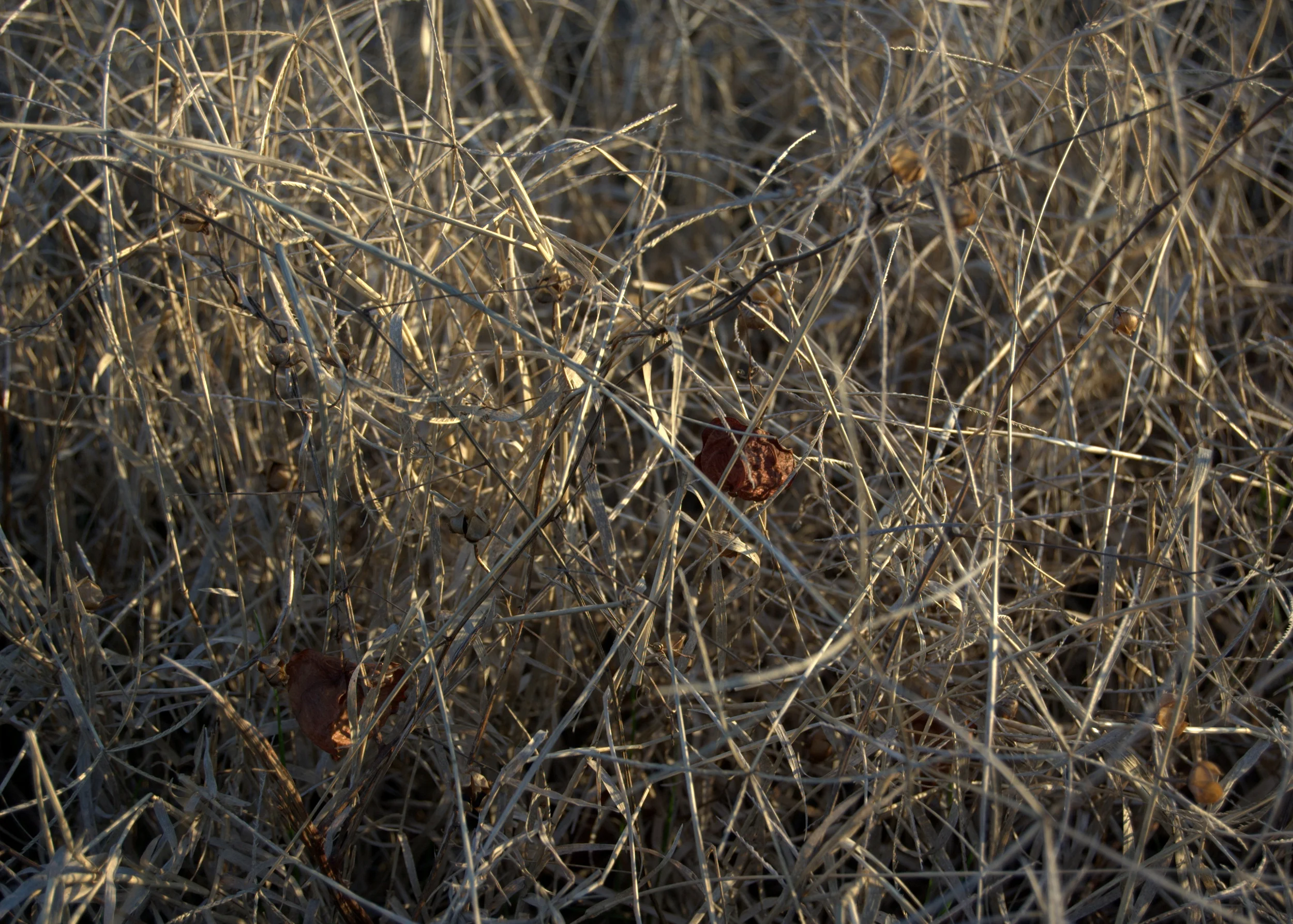
Cardiospermum halicacabum
I have spotted a Physalis species down the road at Spring Creek, but left it out of my plant account there because I was not definite on the species. The plant at first had me fooled as another Physalis. The primary characteristic of this genus are the paper lanterns that house the seeds of the plant. Instead, Carol Clark informed me that this is most likely Cardiospermum halicacabum, an Asiatic species that shares the same balloon casing. How unfortunate!
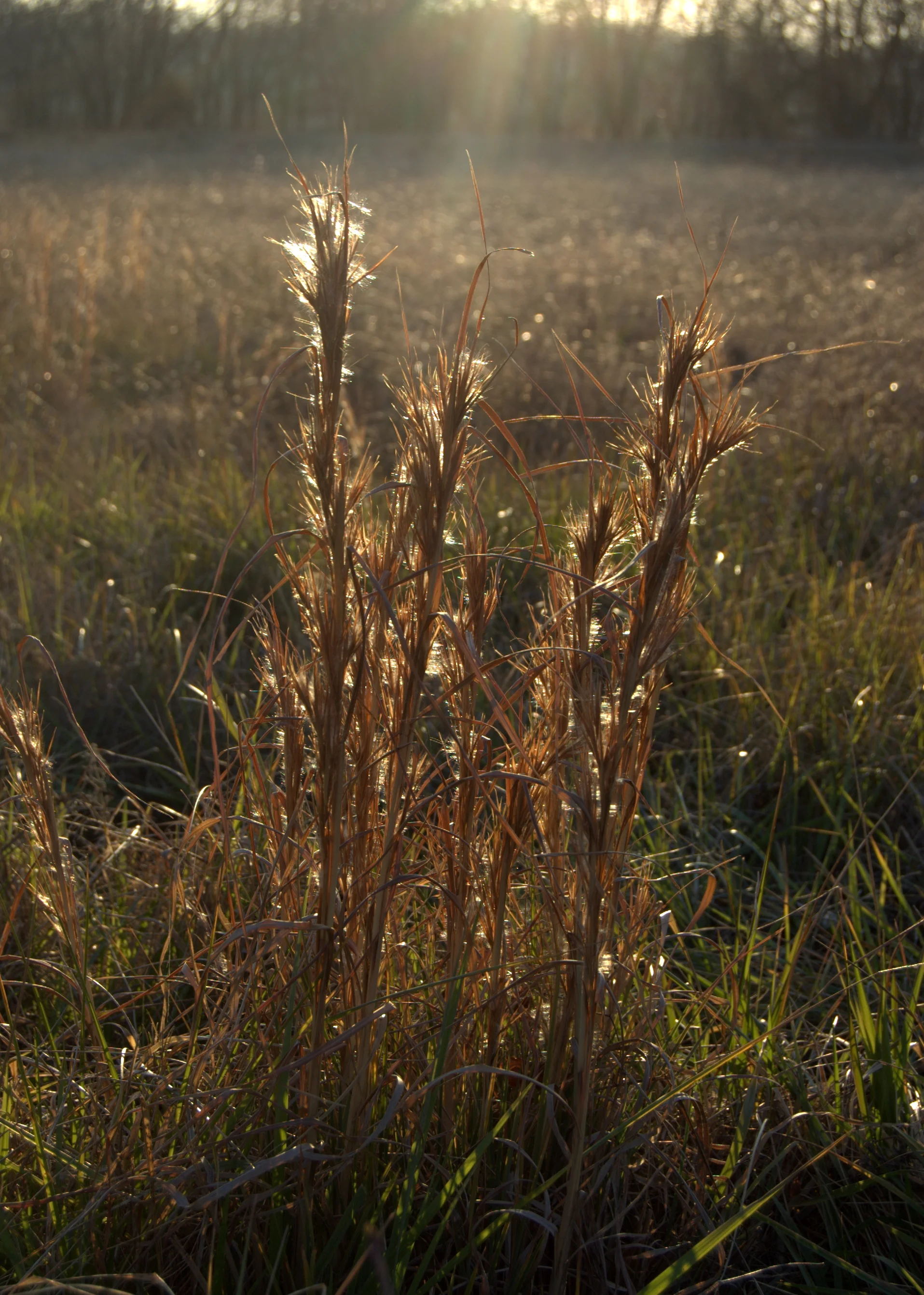
Andropogon glomeratus
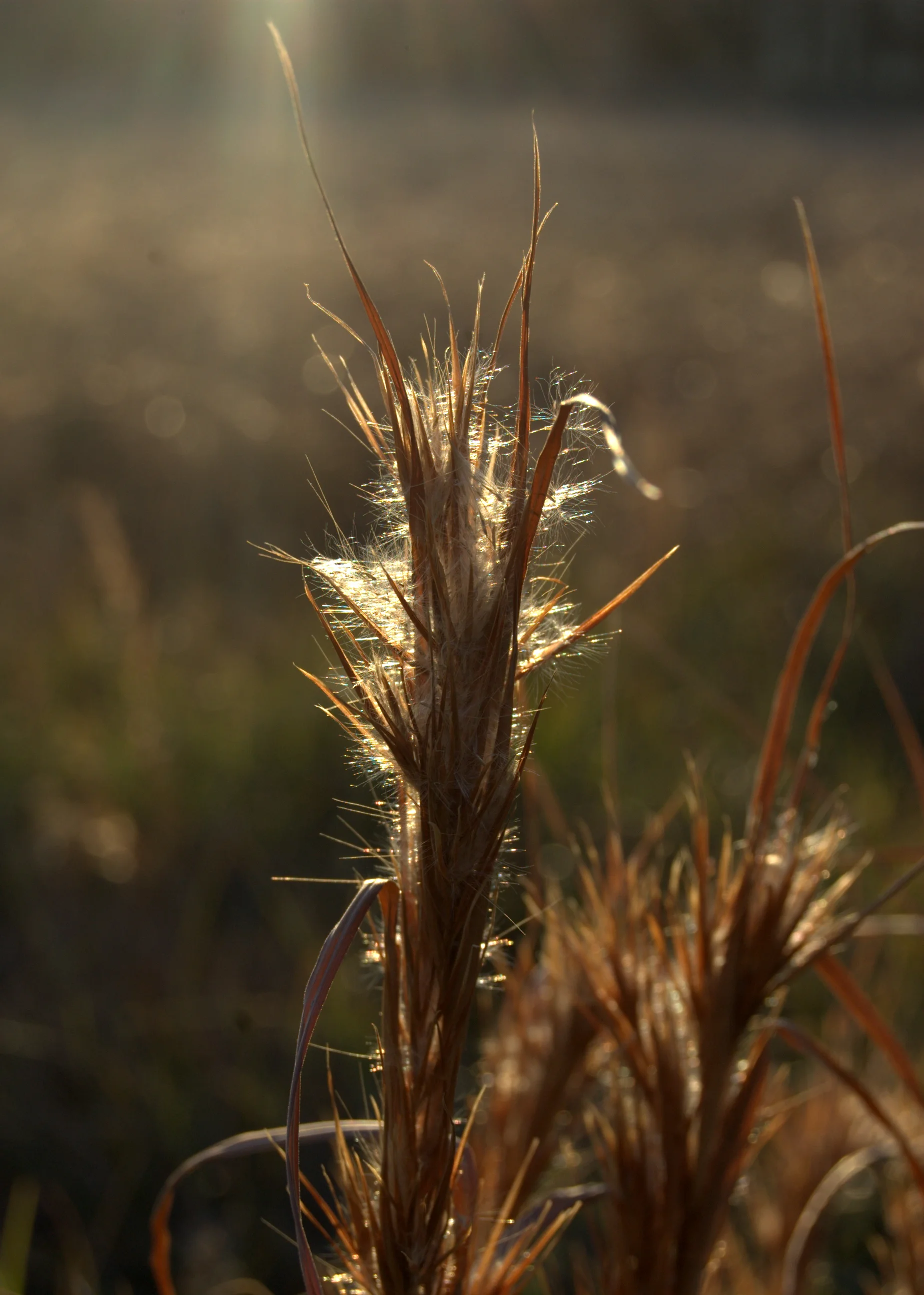
Andropogon glomeratus
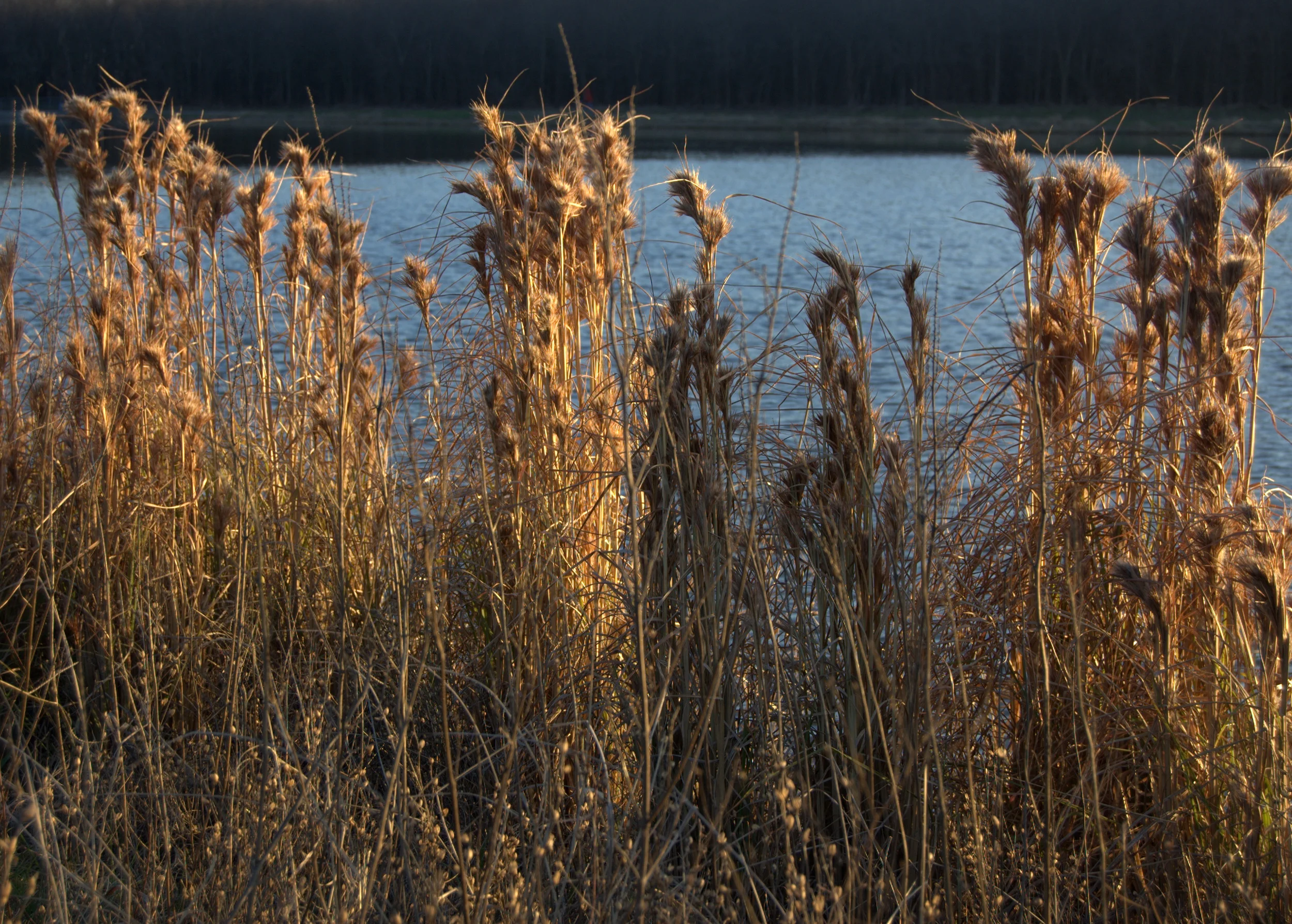
Andropogon glomeratus
Bushy Bluestem is typically found in drainage areas and along waterways. It makes an ideal landscape grass in wet areas and is beginning to rise in popularity among designers.
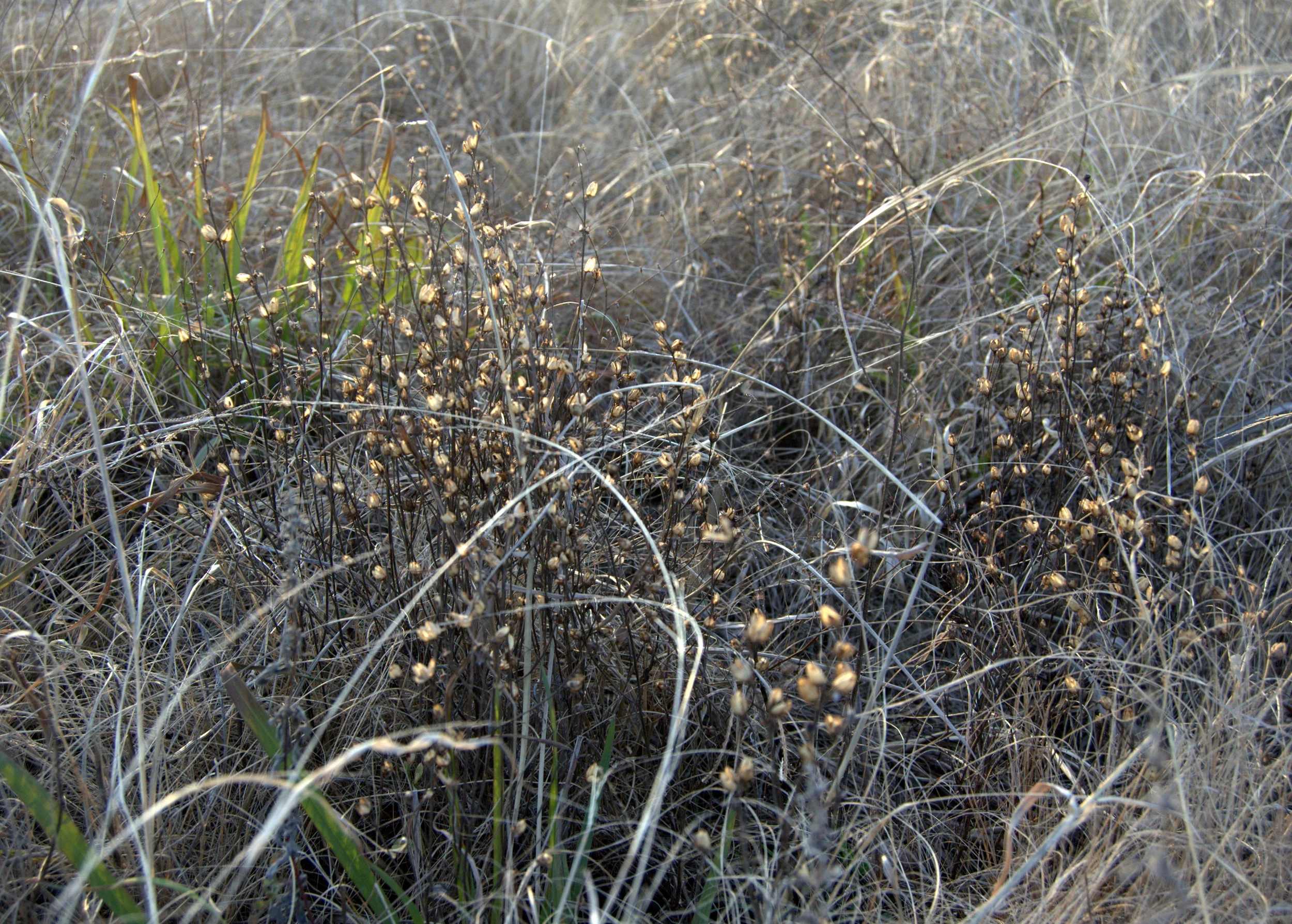
Agalinis heterophylla
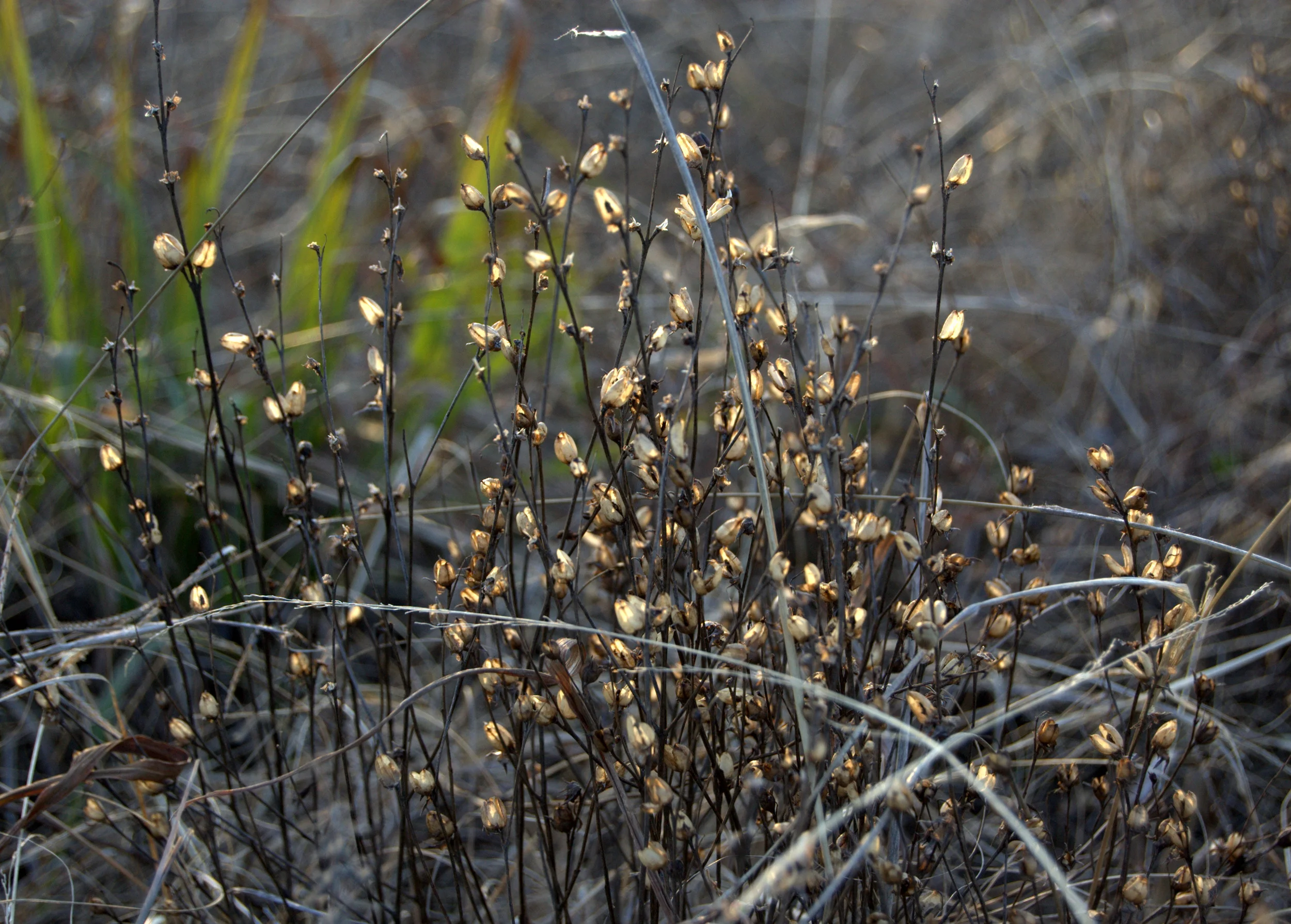
Agalinis heterophylla
Prairie Agalinis blooms pink and lavender in the summer and fall with flowers that mimic a foxglove. I find these illuminated husks equally attractive. Thanks again to Carol Clark for helping me out.
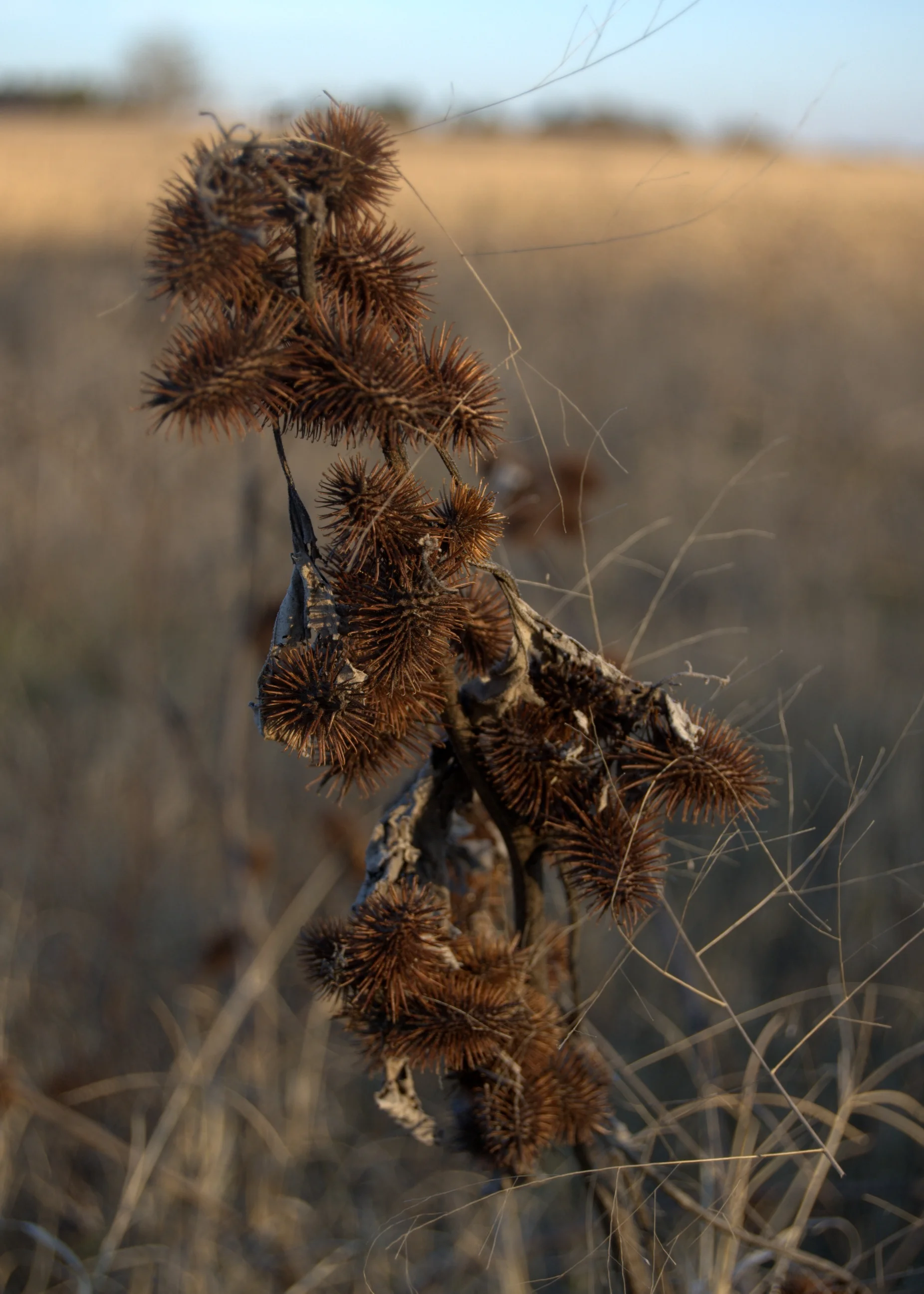
Xanthium strumarium
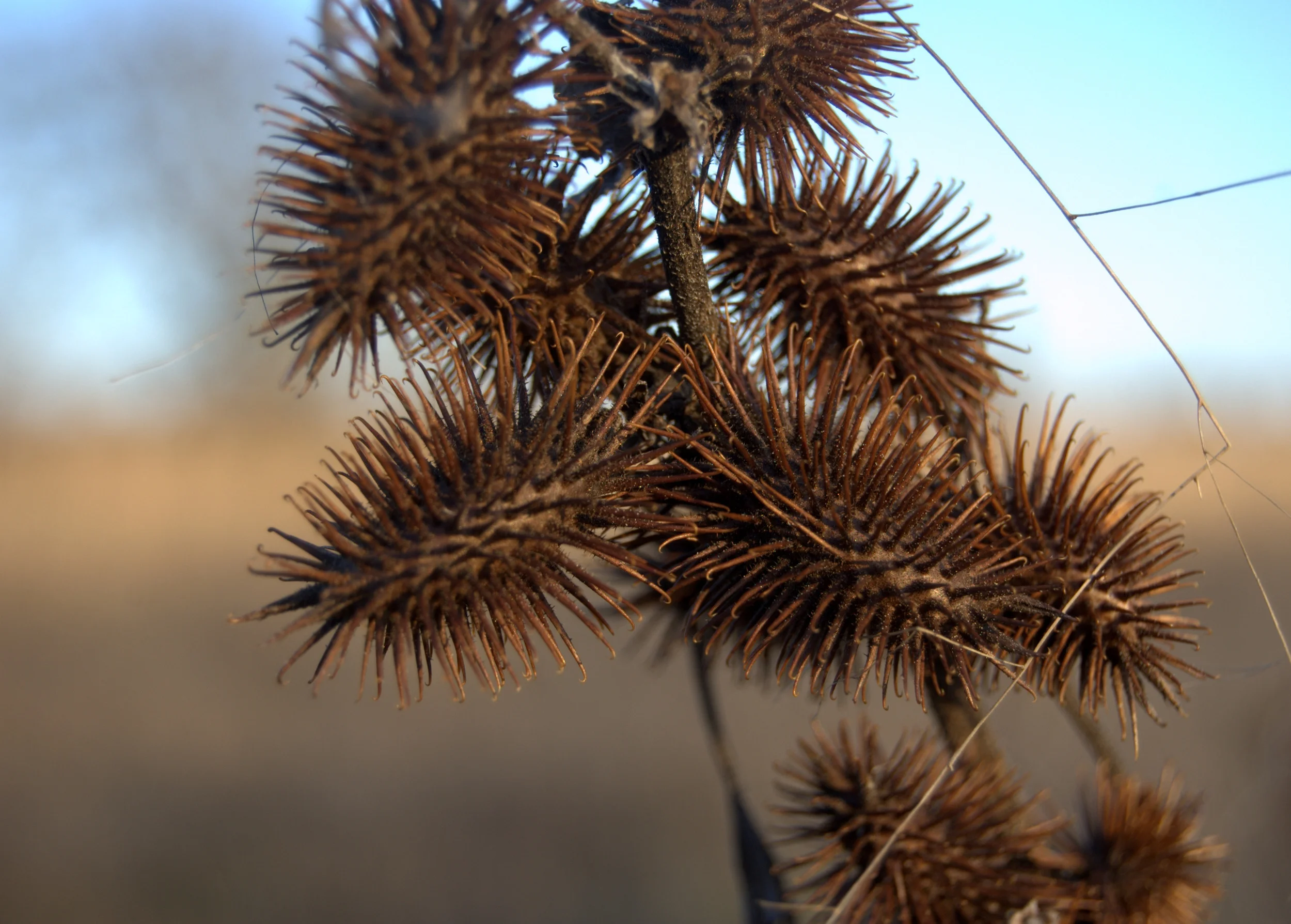
Xanthium strumarium
There is not much use for Cockleburs in todays world, but they were the inspiration for the inventor of Velcro. The seeds were also the most commonly recorded food source for the now extinct Carolina Parakeet, the only parrot native to the eastern US.

Desmanthus illinoensis
Illinois Bundleflower is an open-growing perennial rarely reaching over three feet in height. The preceding flowers are representative of the Fabaceae family, but more recognizable is the seedhead with its layers of pods.
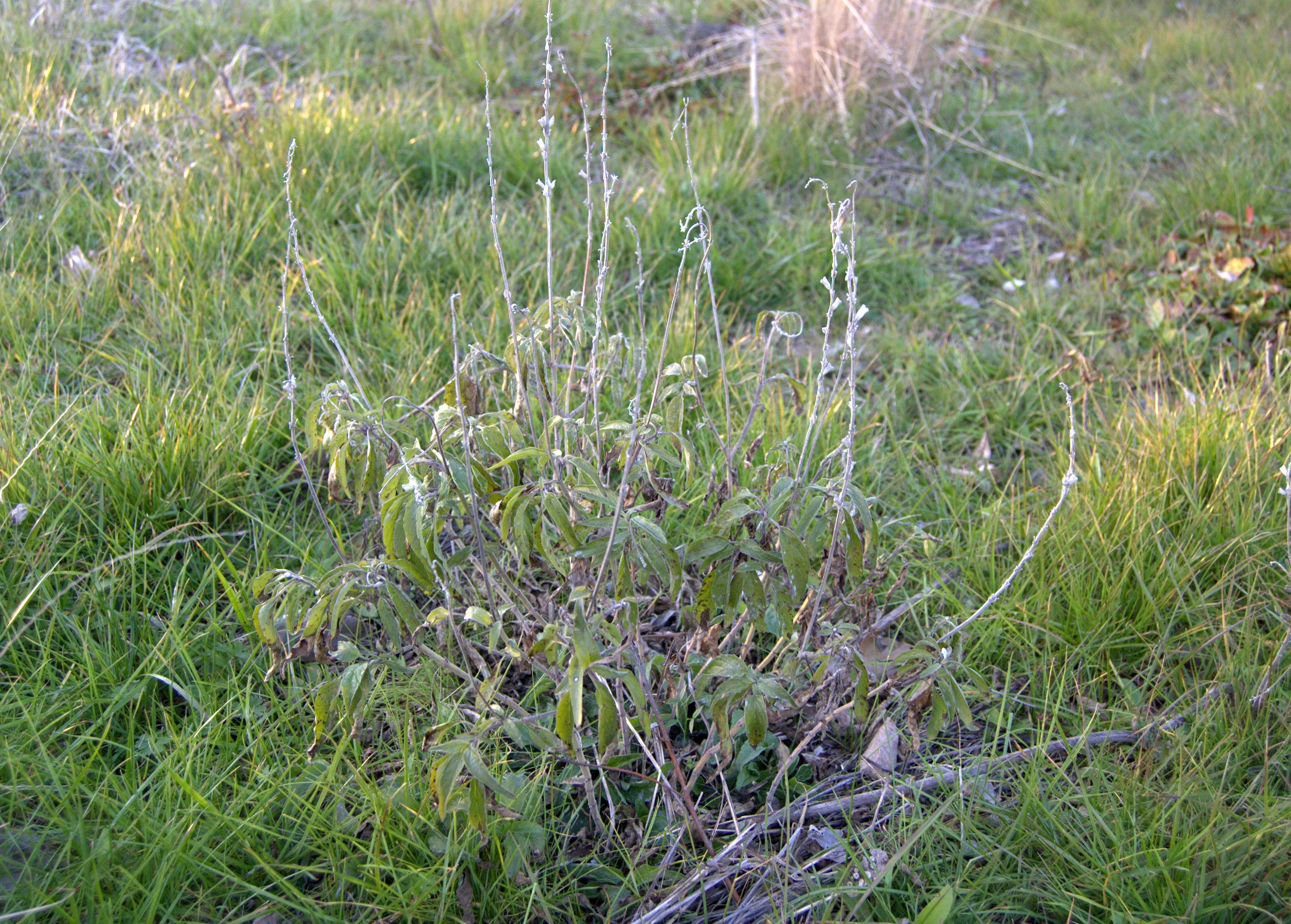
Salvia farinaceae
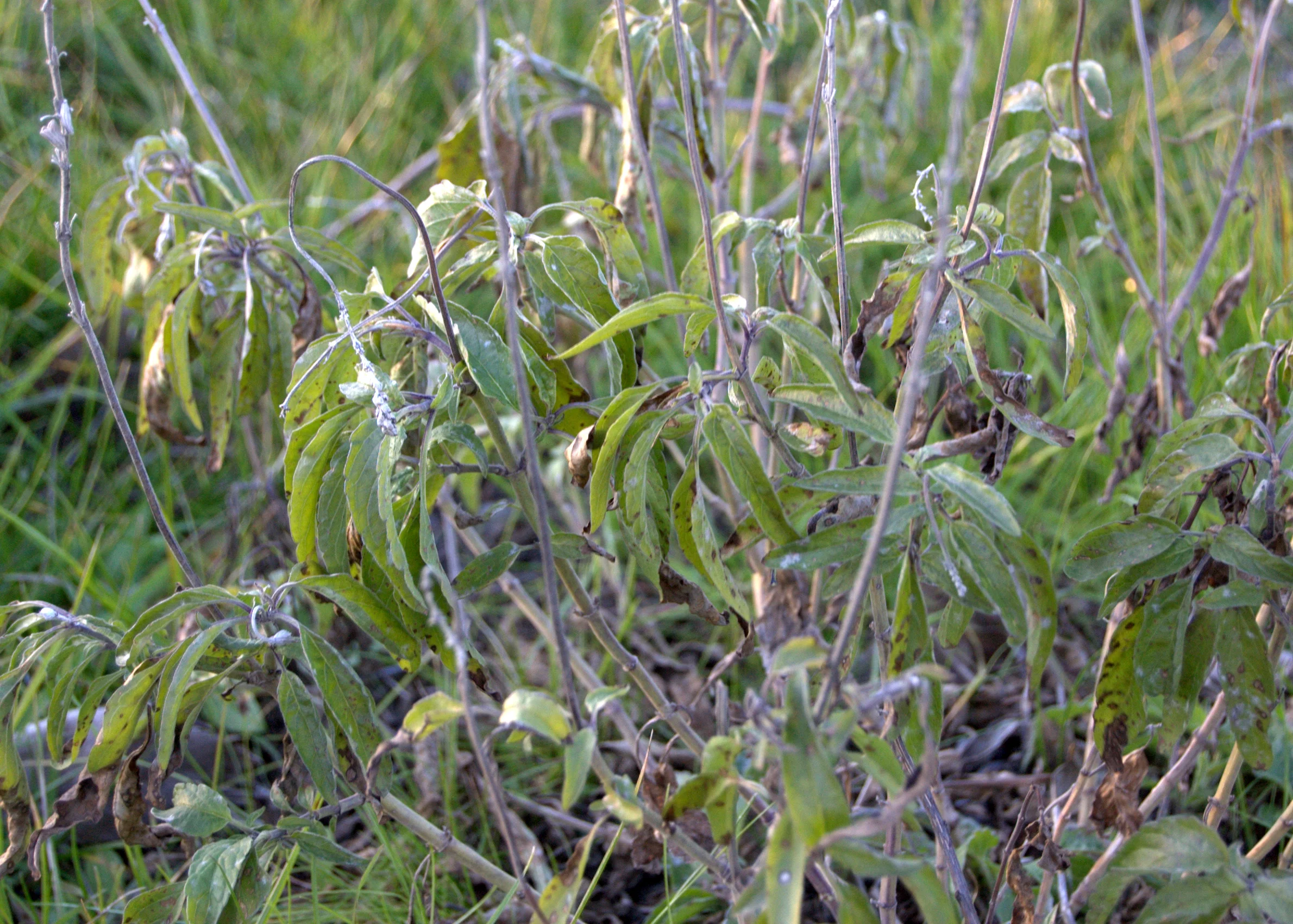
Salvia farinaceae
Just a few months before, this Salvia would have been covered in blue blooms.
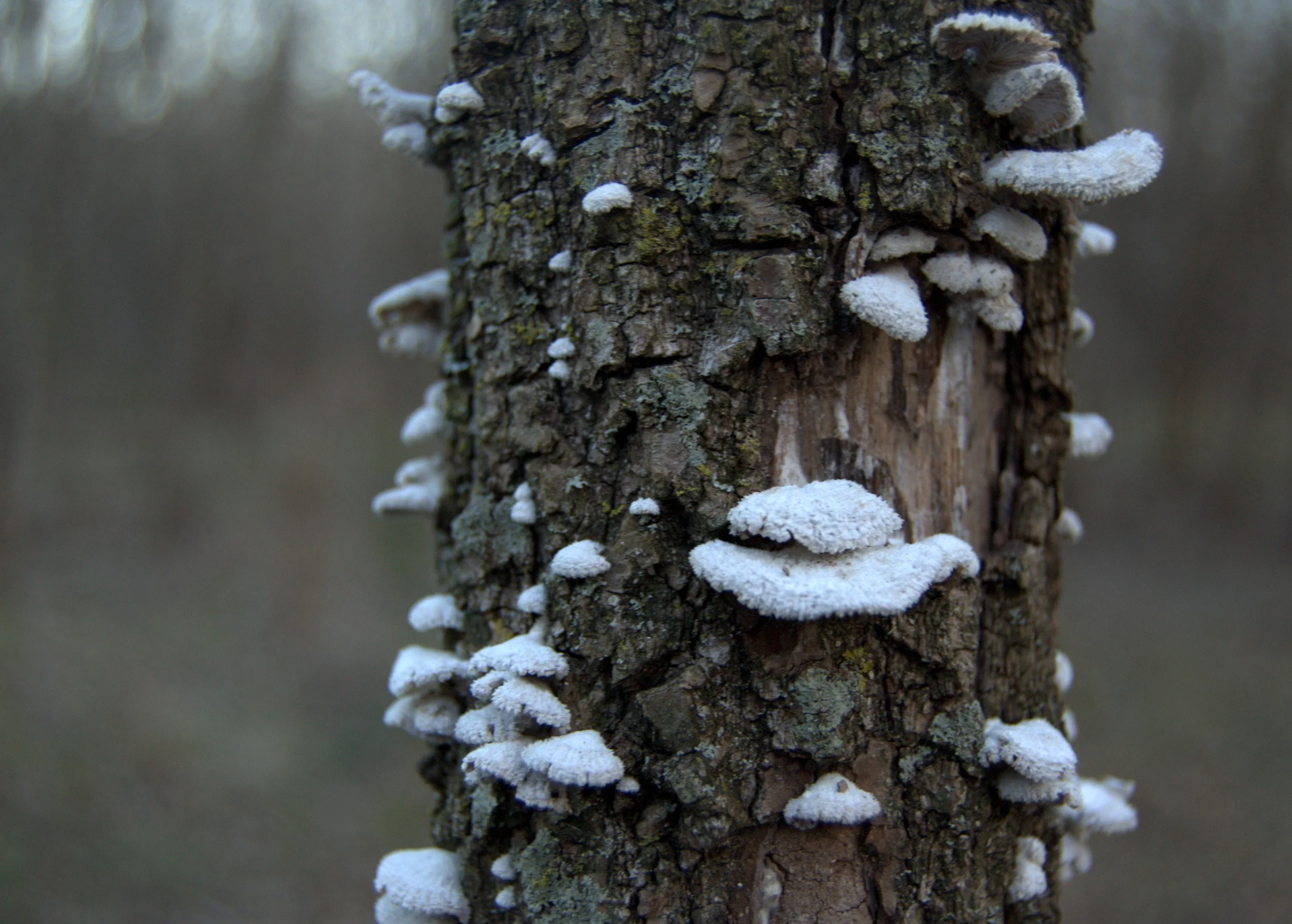
Mushrooms
The Elm forest here allows a whole different palette of organisms to thrive.
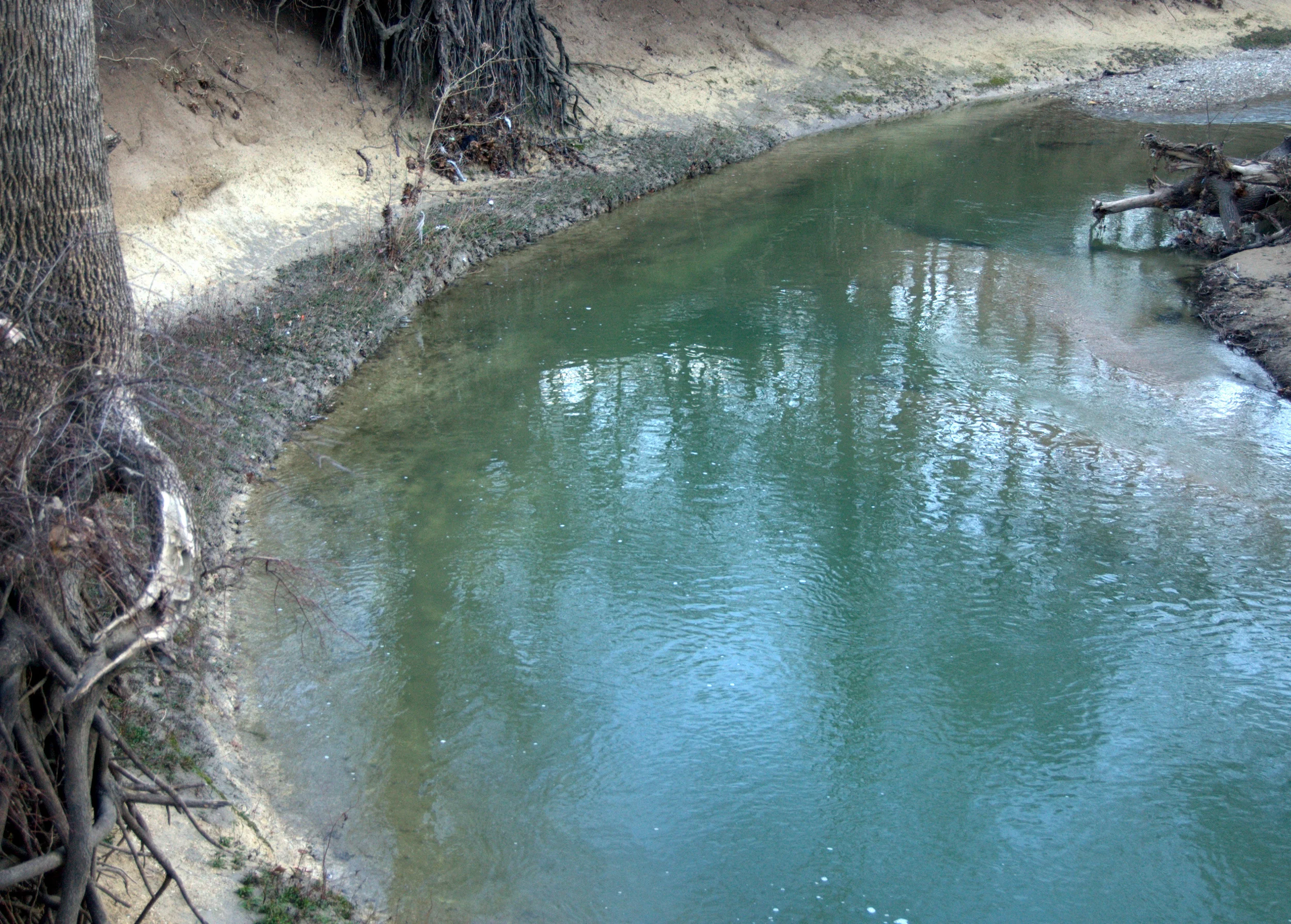
Rowlett Creek
Rowlett Creek experienced devastating flooding this spring and the effects were evident throughout the forest.
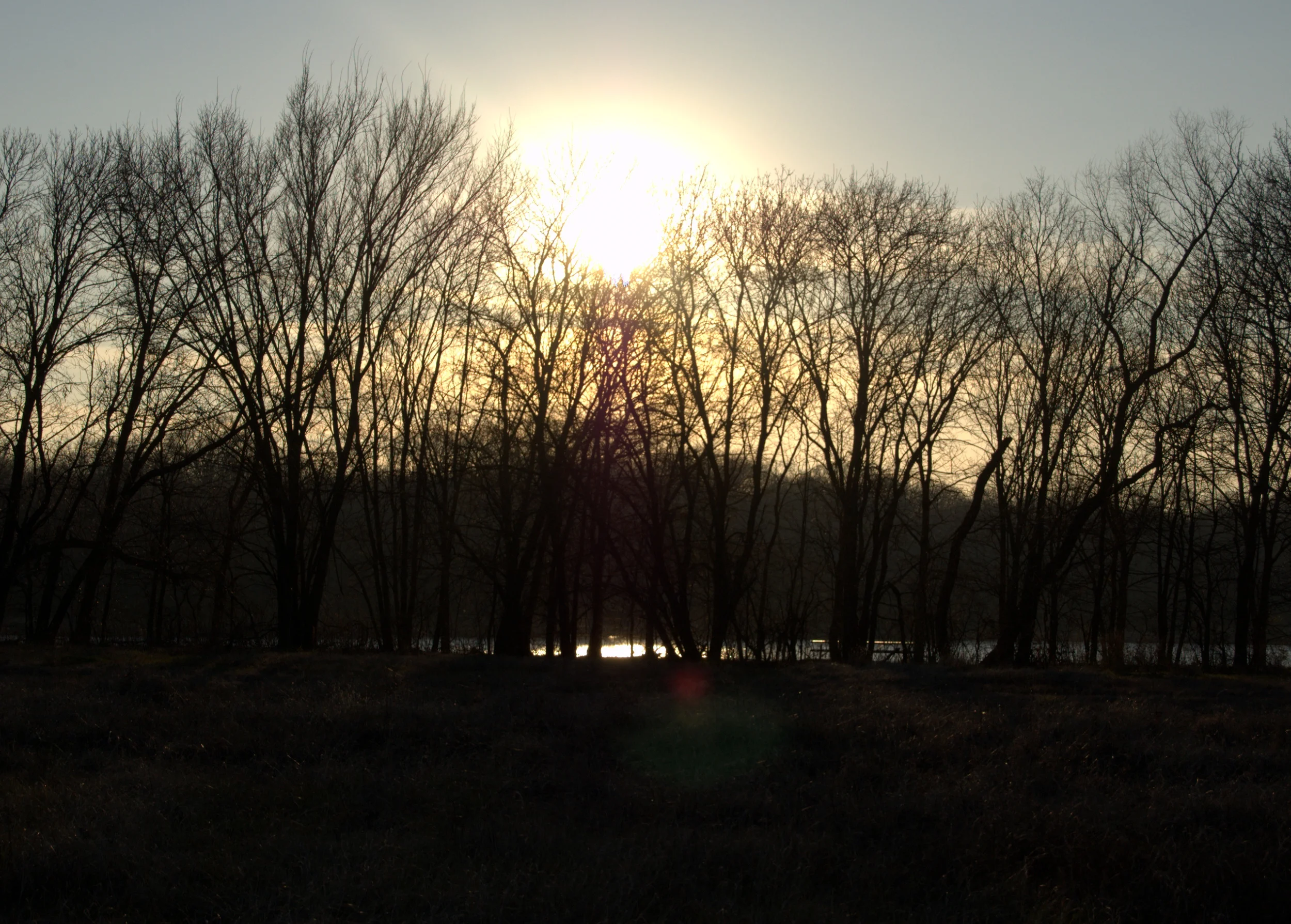
I will be returning to explore another section of this expansive park very soon. I've heard there are even more exciting species to discover.